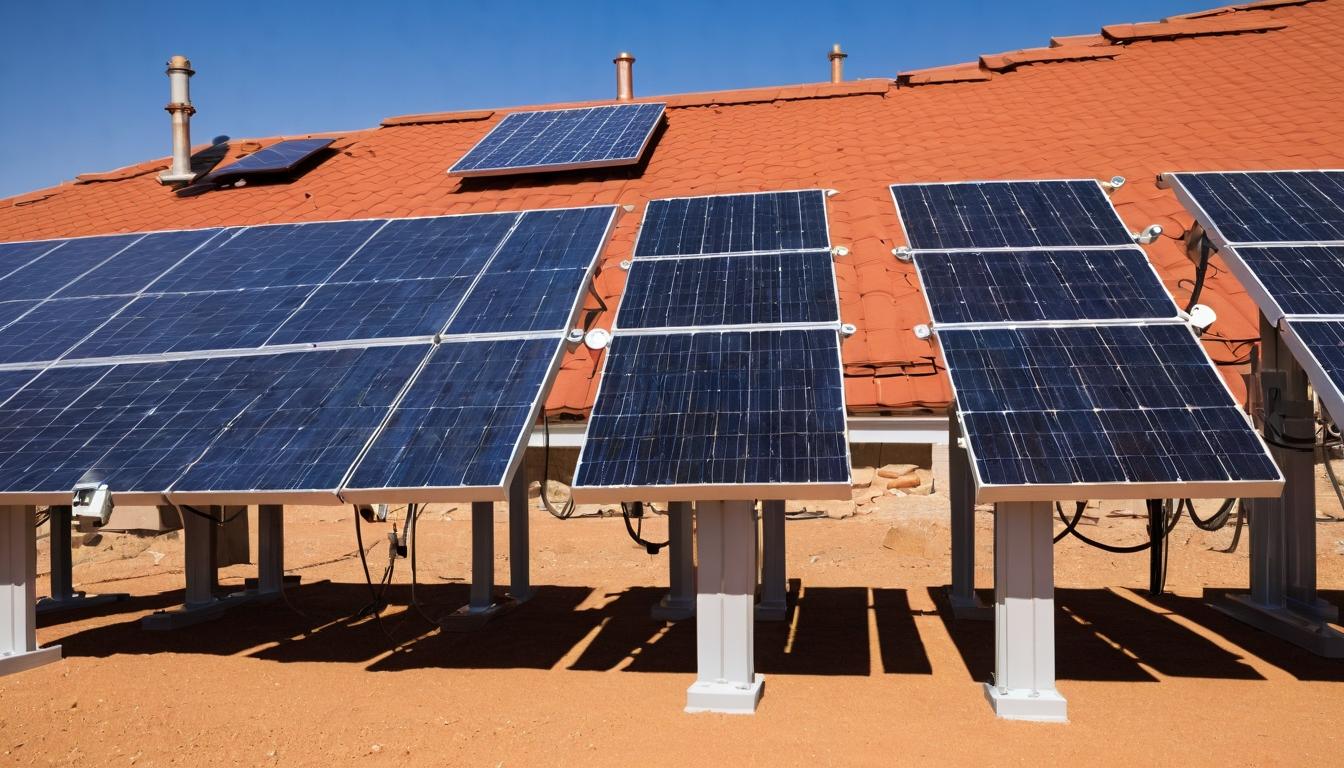
In a nondescript office building in Columbus, Ohio, a meeting took place last month that could reshape how Americans power their homes for decades. Utility executives, regulators, and a handful of clean energy advocates gathered around a polished conference table, debating technical language that most consumers would never see. The topic? How to calculate the value of rooftop solar panels—a seemingly mundane discussion with billion-dollar consequences. This quiet regulatory battle, playing out in state capitals from Arizona to Maine, represents the real frontline in America's energy transition, far from the flashy headlines about Tesla batteries or offshore wind farms.
What's at stake isn't just kilowatt-hours or carbon emissions, but control. For over a century, utilities operated as regulated monopolies, building centralized power plants and delivering electricity through one-way grids. Now, as solar panels, batteries, and smart thermostats turn homes into mini-power stations, that century-old model is cracking. The response from many utilities has been subtle but systematic: proposing new fees for solar customers, slowing interconnection processes, and advocating for rules that maintain their dominance. 'They're playing regulatory chess while everyone else is playing checkers,' says Maria Chen, a former utility regulator turned clean energy consultant. 'The moves are technical, but the strategy is about survival.'
Meanwhile, in Texas, an entirely different energy revolution is unfolding—one driven by pure market forces rather than regulatory maneuvering. The state's unique grid, operated by ERCOT, has become a laboratory for innovation precisely because it lacks traditional utility structures. Here, companies are experimenting with virtual power plants that aggregate thousands of home batteries to act like a traditional power plant during peak demand. One startup, Voltus, pays homeowners for the right to tap their Powerwall batteries during heatwaves, creating what founder Gregg Dixon calls 'an invisible grid of distributed resources.' The results speak for themselves: during last summer's record heat, these aggregated resources provided more capacity than some natural gas plants.
This Texas experiment reveals an uncomfortable truth for traditional utilities: the technology for a decentralized grid already exists. What's missing isn't better batteries or smarter inverters, but business models and regulations that reward innovation rather than protect incumbents. In California, this tension exploded into public view when utilities proposed income-based fixed charges that would disproportionately impact solar adopters. The backlash was immediate and fierce, with critics calling it a 'solar tax' designed to slow rooftop adoption. Yet buried in the 200-page proposal was a more fundamental question: as grids become more distributed, who pays for maintaining the poles and wires everyone still needs?
Perhaps the most surprising development in this energy cold war is happening not in sunny California or windy Texas, but in the coal country of West Virginia. There, Appalachian Power is piloting a program that would seem unthinkable just five years ago: paying customers to reduce electricity use during peak times. The utility isn't doing this out of environmental enthusiasm—it's simple economics. Building new power plants is astronomically expensive, while paying customers to temporarily turn off appliances is cheap. This 'demand response' approach represents a quiet revolution in utility thinking: instead of always building more supply, sometimes it's smarter to manage demand.
What connects these disparate stories from Ohio boardrooms to Texas startups to West Virginia pilot programs is a fundamental reimagining of what a utility actually is. The old model—build a big plant, send power one way, collect monthly checks—is becoming obsolete. The new model looks more like an orchestra conductor than a factory foreman, coordinating thousands of distributed resources to create reliable, affordable power. Some utilities are embracing this future enthusiastically, while others are fighting it with every regulatory tool available.
For consumers watching their electricity bills rise faster than inflation, these behind-the-scenes battles matter more than any presidential climate policy. The rules being written today will determine whether you can profit from your rooftop solar panels, whether your electric vehicle charges when renewables are abundant, and whether your smart thermostat saves you money or just makes the utility richer. As energy analyst James Rogers puts it: 'The energy transition isn't happening in Washington or at United Nations conferences. It's happening in state utility commission hearings that nobody attends.'
Ultimately, America's energy future won't be decided by which technology wins—solar versus wind versus nuclear—but by who controls the rules of the game. Will utilities evolve into platform managers coordinating a decentralized grid, or will they use their regulatory power to slow change until their traditional business models can catch up? The answer is being written right now, in technical documents and regulatory filings that rarely make the news. But its impact will echo in every light switch flipped and every electric vehicle charged for generations to come.
The hidden battle for America's energy future: Why utilities are quietly rewriting the rules