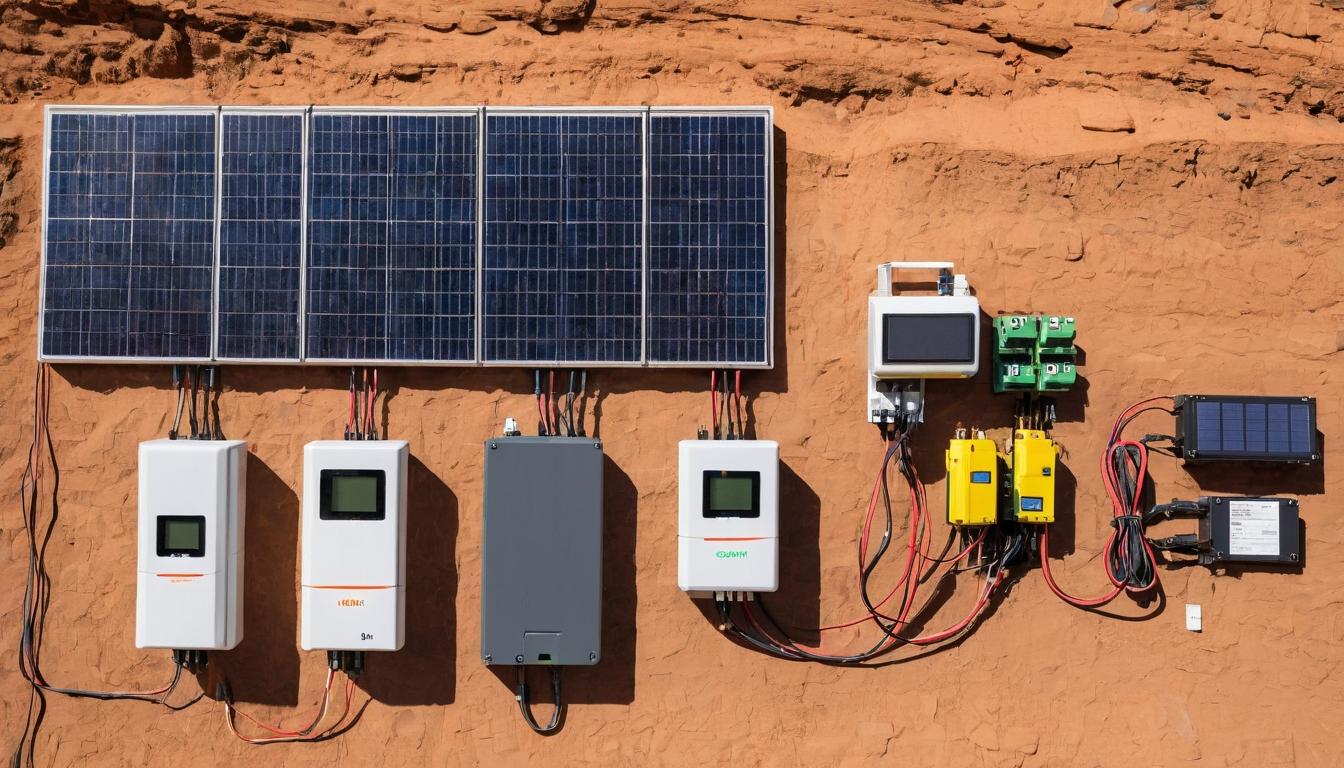
While headlines scream about megaprojects and political battles over energy policy, a quieter revolution is unfolding across America's backyards, rooftops, and community centers. This isn't about massive solar farms visible from space or towering wind turbines that dominate skylines. Instead, it's about the growing network of small-scale, distributed energy resources that are fundamentally changing how electricity flows through our grids—often without most people even noticing.
Walk through any suburban neighborhood today, and you'll see the physical evidence of this shift. Solar panels that were once a rare sight now adorn roofs from California to Connecticut. Home batteries like Tesla's Powerwall have moved from luxury items to practical investments for thousands of homeowners. Electric vehicles sit in driveways, not just as transportation but as potential mobile power sources. Each of these represents a tiny node in what energy experts are calling the "distributed grid"—a system where power generation and storage happens closer to where it's actually consumed.
What makes this trend particularly fascinating isn't just its growth, but how it's challenging traditional utility business models that have remained largely unchanged for a century. For decades, electricity flowed in one direction: from large centralized power plants through transmission lines to substations, then through distribution networks to homes and businesses. Utilities made money by building infrastructure and selling electrons. Now, with customers generating their own power, that linear model is breaking down.
Consider the numbers: The U.S. added over 5 gigawatts of small-scale solar capacity in 2023 alone—enough to power nearly a million homes during peak sunlight. Home battery installations grew by over 300% in the same period. Meanwhile, virtual power plants—networks of distributed resources that can be coordinated to act like traditional power plants—are managing hundreds of megawatts of capacity across multiple states. These aren't niche experiments anymore; they're becoming mainstream infrastructure.
Behind this physical transformation lies a technological revolution in software and controls. Advanced inverters on solar systems can now provide grid services like voltage support. Smart thermostats and water heaters can automatically adjust their consumption during peak demand. Sophisticated algorithms coordinate thousands of devices to respond to grid needs in real-time. This digital layer turns what were once passive consumption points into active grid participants.
The regulatory landscape is scrambling to catch up. Net metering policies—which credit solar owners for excess power they send to the grid—have become political battlegrounds in states from California to Florida. Rate design is being reexamined as utilities seek to recover fixed grid costs from customers who use less grid electricity. New tariffs, demand charges, and subscription models are emerging, creating both opportunities and confusion for consumers.
Perhaps most intriguing is how this distributed energy movement is creating new business models and strange bedfellows. Traditional utilities are launching their own rooftop solar programs. Oil companies are acquiring home energy management startups. Tech giants are entering the energy market through smart home devices. Meanwhile, community solar projects allow renters and low-income households to participate in the solar revolution without installing panels on their own roofs.
Environmental benefits are significant but only part of the story. Yes, distributed solar reduces carbon emissions. But resilience might be the more immediate value proposition. When Hurricane Fiona knocked out Puerto Rico's grid in 2022, homes with solar and batteries kept their lights on while their neighbors waited weeks for restoration. In California, during wildfire prevention power shutoffs, distributed resources created pockets of normalcy in darkened communities.
Yet challenges remain. The electrical grid wasn't designed for bidirectional power flow at scale. Aging infrastructure in many areas struggles with the variability of distributed generation. Cybersecurity concerns grow as more devices connect to the grid. And equity questions persist: Will the benefits of this energy transition flow to all communities, or will it create new divides between energy haves and have-nots?
Looking forward, the distributed energy revolution appears unstoppable. Costs continue to fall—solar panel prices have dropped 90% in the last decade. Battery technology improves annually. Consumer interest grows with every power outage and rate increase. The question isn't whether distributed resources will reshape our energy system, but how quickly and in what configuration.
What's emerging is a hybrid grid—part centralized, part distributed; part analog, part digital; part utility-controlled, part consumer-managed. This isn't the clean, simple system of textbooks. It's messy, complex, and constantly evolving. But it might just be more resilient, efficient, and democratic than what came before. The quiet revolution in our backyards is becoming impossible to ignore.
The hidden grid: How small-scale energy is quietly reshaping America's power landscape