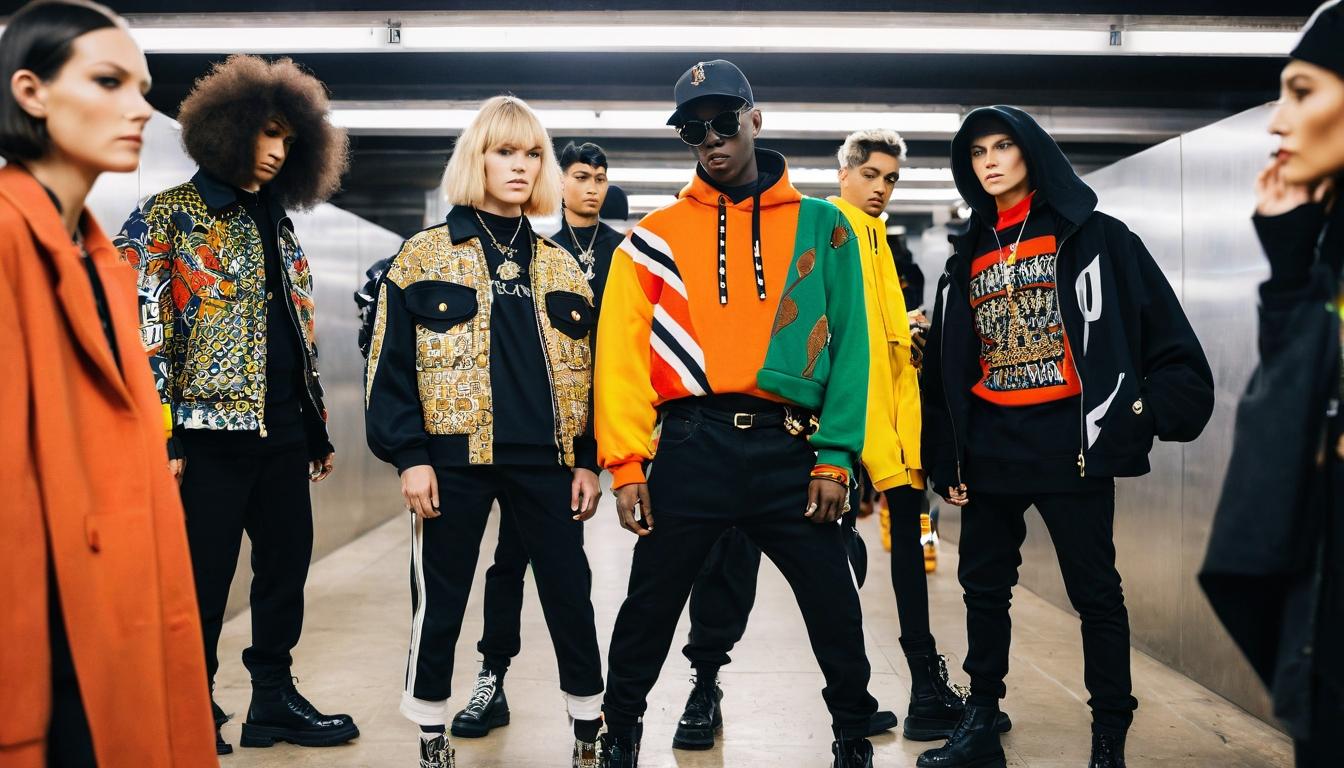
In the dimly lit corners of underground clubs and on the cracked pavement of city streets, a quiet revolution is brewing. It's not announced by press releases or celebrated on red carpets, but felt in the basslines vibrating through concrete and seen in the DIY patches on worn denim jackets. While mainstream fashion cycles through predictable trends, a parallel universe of style is being forged in the crucible of music subcultures—from hyperpop's digital maximalism to drill's gritty realism—creating aesthetics that feel more authentic than anything coming off a Paris runway.
Walk into any underground venue from Brooklyn to Berlin, and you'll witness fashion being written in real time. It's not about wearing what's "in" but expressing what's within. The hyperpop scene, with its glitchy beats and emotional rawness, has spawned a style that mixes childhood nostalgia with cyberpunk futurism—think baby tees splattered with anime graphics paired with platform boots that look like they escaped a video game. Meanwhile, UK drill's influence has transformed streetwear into something darker and more utilitarian, with balaclavas and tactical vests becoming unlikely fashion statements that speak to urban survival.
What makes these music-born styles so compelling is their resistance to commodification. Unlike fashion trends that trickle down from luxury houses, these aesthetics bubble up from communities. The DIY ethos of punk never really died—it just evolved. Today's underground musicians and their followers customize thrift store finds with political patches, hand-paint their jeans, and trade clothing at shows. This isn't fast fashion; it's slow, personal, and charged with meaning. When an artist like Eartheater performs in garments she's altered herself, or when experimental collective 100 gecs inspires fans to dress in chaotic, colorful layers, they're creating fashion that can't be easily copied by fast-fashion retailers.
Technology has accelerated this symbiosis between sound and style. TikTok and SoundCloud aren't just platforms for discovering music—they're visual style laboratories. Hyperpop artists like underscores or midwxst don't just release songs; they drop entire aesthetic universes complete with visualizers that dictate color palettes and clothing references. The digital native generation doesn't separate their musical tastes from their fashion choices—they curate them as part of a cohesive identity. This has created micro-trends that emerge and evolve at lightning speed, leaving traditional fashion calendars looking positively glacial.
Perhaps most surprisingly, these underground movements are beginning to influence the mainstream in reverse. Luxury brands that once dictated trends are now scrambling to capture the authenticity of music subcultures. We've seen Balenciaga's dystopian runway shows that could double as drill music videos, and Gucci's collaborations with artists like Harry Styles who borrow heavily from glam rock aesthetics. But there's often something lost in translation—the polish removes the rebellion, the price tag negates the accessibility.
The real power of music-driven fashion lies in its ability to tell stories that ready-to-wear collections often can't. A drill artist's choice to wear a Canada Goose jacket isn't just about warmth—it's a symbol of survival in harsh environments. The glitter and neon of hyperpop fashion aren't mere decoration—they're armor against a gray world. These styles carry narratives of resistance, identity, and community that transcend seasonal trends.
As fashion becomes increasingly homogenized by globalization and algorithm-driven trends, these music subcultures offer something precious: localized style with global resonance. The specific regional variations—how London's drill style differs from Chicago's, how LA's hyperpop scene looks versus Seoul's—create a rich tapestry of expression that resists flattening. This isn't fashion for fashion's sake; it's fashion as cultural documentation, as protest, as celebration.
Looking forward, the most exciting style innovations may not come from fashion schools or design studios, but from recording studios and basement shows. As genre boundaries continue to blur—with artists blending metal with electronic, or folk with hip-hop—the resulting fashion hybrids will likely become even more inventive. The future of style might just be found in the mosh pit, where the vibrations of the music literally shake new forms of expression into being.
Ultimately, the underground sound of fashion reminds us that style at its best isn't about what you wear, but why you wear it. It's the visible manifestation of the music that moves us, the communities that sustain us, and the identities we're constantly composing. In an age of curated Instagram aesthetics, there's something radically honest about letting your playlist dress you.
The underground sound of fashion: How music subcultures are reshaping style from the ground up