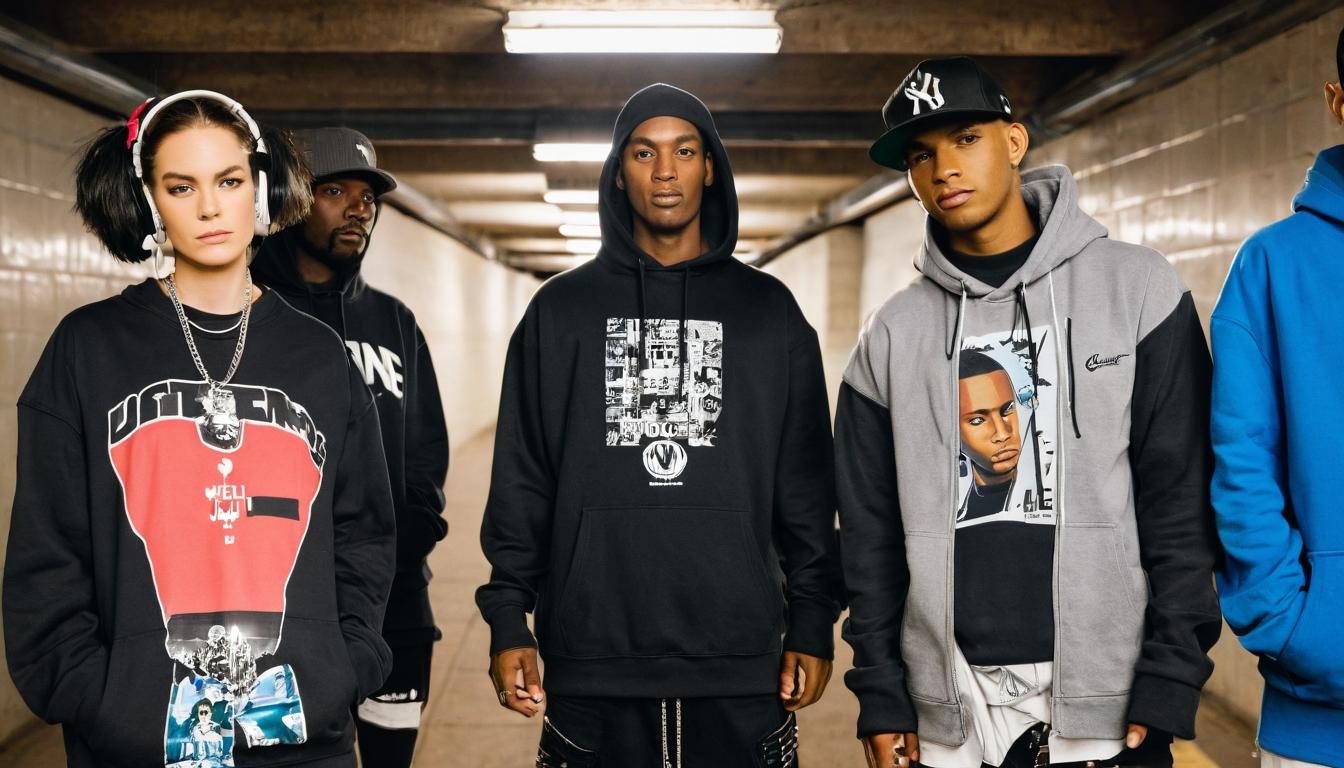
In the dimly lit backrooms of Tokyo's Harajuku district, where the scent of spray paint mixes with the bass from hidden speakers, a revolution is being stitched together one thread at a time. This isn't just about clothes anymore—it's about the rhythm that moves through them. While mainstream fashion publications chase seasonal trends, a deeper current flows beneath the surface, connecting underground music collectives with the streetwear that's defining a generation. The relationship has always existed, but today's symbiosis feels different, more intentional, more like a shared language than a casual collaboration.
Walk into any independent record shop from London's Soho to Los Angeles' Fairfax District, and you'll see it immediately. The clerk isn't just selling vinyl; they're wearing limited-edition sneakers that dropped alongside an experimental electronic album. The posters on the wall advertise both underground rap shows and pop-up clothing releases. This convergence isn't accidental—it's the result of artists who no longer see boundaries between their sonic expressions and their sartorial choices. They're building ecosystems, not just wardrobes or playlists.
What's fascinating isn't the celebrity endorsements or high-profile brand partnerships that dominate headlines. It's the organic growth happening in basements and back alleys, where DIY ethos meets digital distribution. Young designers are producing capsule collections inspired by specific music subgenres—think vaporwave aesthetics translated into oversized jackets, or drill music's raw energy manifesting in utilitarian cargo pants. These creators often release their pieces through Bandcamp or SoundCloud links rather than traditional retail channels, blurring the line between merchandise and fashion statement.
Meanwhile, musicians are becoming de facto creative directors, influencing cuts, fabrics, and silhouettes through their personal style. Look at the rise of archive fashion among hip-hop artists, who hunt down vintage pieces not for nostalgia but for their unique stories. Or observe how electronic producers in Berlin have popularized a specific kind of functional minimalism that prioritizes movement and comfort over traditional fashion rules. These aren't trends dictated from above; they're cultures expressing themselves through every available medium.
Technology has accelerated this fusion in unexpected ways. TikTok algorithms don't distinguish between a fashion tutorial and a music video—they serve both to the same audiences hungry for identity. Digital fashion shows now feature original scores from emerging artists, giving them platform parity with established designers. Even blockchain technology enters the picture, with NFTs granting access to both exclusive tracks and physical clothing items, creating new models of community and ownership.
Yet for all the innovation, challenges remain. Cultural appropriation looms large when fashion brands mine music subcultures for aesthetics without supporting the artists who created them. Sustainability questions arise when fast-fashion retailers copy underground styles without understanding their origins. And economic barriers persist, as independent creators struggle to scale their vision while maintaining authenticity.
The most exciting developments come from those bridging these worlds intentionally. Collectives like London's NTS Radio, which curates both music and fashion markets. Or platforms like ComplexCon, which treats sneaker drops and live performances as equally important cultural events. These spaces recognize that today's youth don't consume culture in categories—they experience it as a continuous flow of sound, texture, and meaning.
Perhaps what we're witnessing is the emergence of a new creative class that refuses specialization. They're producers who design, designers who DJ, and visual artists who score their own exhibitions. Their uniform isn't a brand logo but a carefully curated expression of multiple influences. In an age of algorithmic recommendations, this human-driven curation feels increasingly precious—a reminder that the most compelling styles emerge from real communities, not corporate boardrooms.
As fashion week calendars expand to include music festival partnerships and album release parties double as fashion shows, the lines will continue to blur. The question isn't whether music will influence fashion—it always has—but how these intertwined cultures will navigate commercialization while preserving their soul. The answer might be found in those Harajuku backrooms after all, where the sewing machines hum in time with the beat, creating something greater than the sum of its parts.
The underground sound of streetwear: How music scenes are reshaping fashion's future