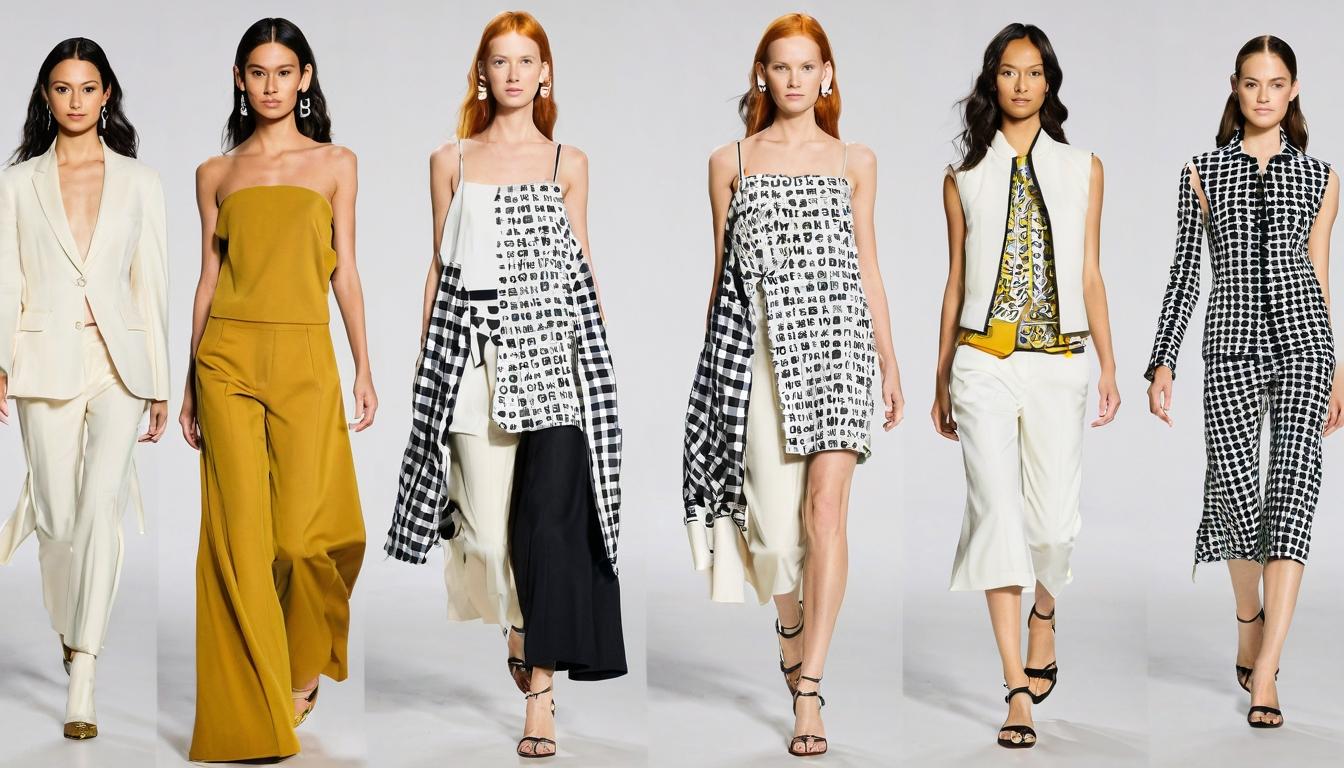
If you've ever wondered why that perfect pair of jeans suddenly disappeared from shelves, or why your favorite designer's latest collection feels strangely familiar yet different, you're witnessing the work of fashion's most powerful yet invisible force. Not the celebrity creative directors or billionaire brand owners, but the pattern-makers, textile developers, and production managers who operate in windowless rooms far from runway spotlights. These are the architects of what we wear, and they're staging a quiet revolution that's changing everything from how clothes are made to who gets to make them.
Walk into any major fashion house's atelier, and you'll find a curious tension between tradition and rebellion. Senior pattern-makers with forty years of experience are teaching algorithms to think about drape and movement, while young textile engineers fresh from materials science programs are convincing luxury brands to adopt mushroom leather and pineapple fiber. This isn't just about sustainability buzzwords—it's about fundamentally reimagining fashion's physical vocabulary. The very language of clothing—how it feels against skin, how it moves with a body, how it ages over time—is being rewritten by people whose names never appear on labels.
Meanwhile, in factories from Milan to Mumbai, production managers are negotiating a delicate dance between cost, quality, and ethics that most consumers never see. The real story of fashion's supply chain isn't in glossy sustainability reports but in the daily decisions of these professionals: choosing between a cheaper synthetic blend that will pill after three washes versus a more expensive natural fiber that will last for years, or figuring out how to pay living wages while keeping prices competitive. These invisible calculations determine not just what ends up in stores, but what kind of industry fashion becomes.
Perhaps most surprisingly, this behind-the-scenes revolution is creating new pathways into fashion for people who never saw themselves in the industry. Community college fashion technology programs are graduating students who go straight into jobs paying $80,000, while former garment workers are becoming quality control specialists with authority to reject entire shipments from billion-dollar brands. The old gatekeepers—fashion schools with six-figure tuitions, exclusive internships, and nepotistic hiring—are finding their influence challenged by a simple reality: the industry needs skilled hands more than it needs well-connected ones.
What emerges from all this behind-the-scenes activity is something fashion desperately needs but rarely celebrates: durability. Not just in the physical sense of clothes that last longer, but in the structural sense of an industry building expertise that won't disappear with the next trend cycle. When you buy a coat made by someone who understands how wool fibers interlock at microscopic levels, or a dress cut by someone who knows how different bodies actually move, you're getting more than clothing—you're getting accumulated knowledge worn on your shoulders.
The next time you put on something that feels inexplicably right—the weight, the drape, the way it settles on your body—remember that you're wearing the quiet victory of fashion's invisible revolutionaries. They're not designing the clothes that make headlines, but they're building the foundation for everything that does. And in an industry obsessed with the new, they're proving that sometimes the most radical act is simply making things that last.
The quiet rebellion: How fashion's invisible hands are reshaping the industry from within