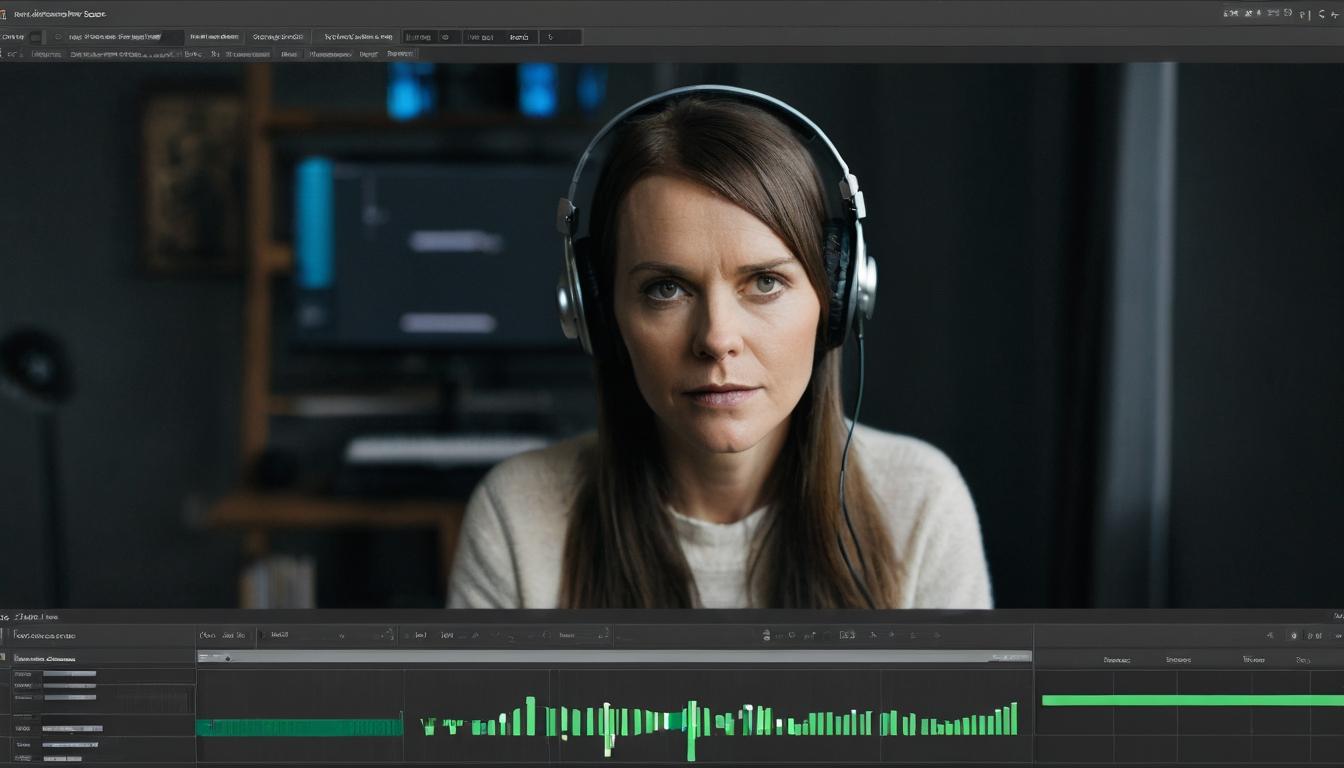
In the dimly lit corners of recording studios across Los Angeles, London, and Reykjavik, a quiet revolution is unfolding. While audiences flock to theaters for superhero spectacles and intimate dramas, the real magic often happens not on screen, but in the sonic spaces between dialogue and action. Modern film composers have stealthily become the architects of our emotional experiences, weaving intricate tapestries of sound that elevate stories from mere visuals to profound human experiences.
Gone are the days when a film score meant simply swelling strings during romantic moments or ominous brass for villains. Today's composers like Hildur Guðnadóttir, Nicholas Britell, and Ludwig Göransson are creating sonic worlds as complex as the films they accompany. Guðnadóttir's work on 'Joker' didn't just support the narrative—it became the character's fractured psyche, using cello sounds that felt like they were bleeding from the screen. This isn't background music; it's foreground storytelling.
The tools have evolved as dramatically as the approach. Where once composers were limited to orchestras and basic synthesizers, today's sound palette includes field recordings from abandoned factories, custom-built instruments, and digital manipulations that blur the line between music and sound design. Johnny Greenwood's score for 'There Will Be Blood' incorporated unconventional string techniques that sounded almost geological, mirroring the film's themes of extraction and ambition. These composers aren't just writing music—they're sonic archaeologists, digging for sounds that feel discovered rather than composed.
Perhaps most surprisingly, streaming platforms have become unlikely patrons of this sonic renaissance. Netflix, Amazon, and Apple TV+ are commissioning scores with budgets and creative freedom that rival traditional studios. When Trent Reznor and Atticus Ross created the haunting electronic landscapes for 'Watchmen,' they weren't just scoring a superhero show—they were building an alternate America's nervous system. The small screen has become a testing ground for big sonic ideas.
Yet this golden age faces its own dissonant chords. The rise of temp tracks—placeholder music used during editing—has created what some call 'the homogenization of Hollywood sound.' When every emotional beat is tested against familiar musical cues, originality can become the casualty. Composers whisper about directors who want 'something like Zimmer but different' or 'minimalist but epic.' The challenge has become how to satisfy commercial expectations while maintaining artistic integrity.
Meanwhile, a new generation of composers is emerging from unexpected places. Video game composers like Austin Wintory ('Journey') and Jessica Curry ('Everybody's Gone to the Rapture') are bringing interactive scoring techniques to film, where music responds not just to narrative but to emotional rhythm. Film festivals now feature panels on 'interactive scoring' and 'adaptive audio,' concepts that would have seemed like science fiction a decade ago.
The business side tells its own story. While top composers command fees in the millions, mid-career artists struggle with tight deadlines and tighter budgets. The myth of the composer as solitary genius has been replaced by the reality of collaborative teams working across time zones. A single film score might involve a composer in Berlin, an orchestrator in Prague, musicians recording in Budapest, and a mixer in Los Angeles—all coordinated via cloud storage and video calls.
What does this mean for the future of film music? Look to innovators like Mica Levi, whose score for 'Under the Skin' used microtonal strings to create alien discomfort, or Dan Romer's work on 'Beasts of the Southern Wild,' which blended folk instruments with orchestral grandeur to magical effect. These artists aren't following trends—they're inventing new emotional languages.
The next time you watch a film, try an experiment: close your eyes during a key scene. Listen to how the music tells the story independently of the images. You might discover that the most compelling performance isn't happening on screen, but in the air between the speakers and your ears. In an age of visual overload, film composers have become our guides to what we feel when we can't find the words—the unsung heroes whispering truths in frequencies only our emotions can understand.
The unsung heroes: How modern film composers are redefining cinematic soundscapes