You've probably never given much thought to the humble paperclip, that simple bent wire holding your documents together. But its story is one of quiet rebellion. During World War II, Norwegians wore paperclips on their lapels as a subtle symbol of unity against Nazi occupation—a silent protest in plain sight. This small act of defiance turned an ordinary office supply into a powerful emblem of resistance, proving that even the most mundane objects can carry profound meaning.
Speaking of quiet revolutions, consider the lowly potato chip. That satisfying crunch you love was born from a chef's frustration. In 1853, at a resort in Saratoga Springs, a patron kept sending back his fried potatoes, complaining they were too thick and soggy. Exasperated, chef George Crum sliced them paper-thin, fried them to a crisp, and salted them heavily, expecting another complaint. Instead, he created an instant sensation. The 'Saratoga Chip' became America's first snack food craze, launching an industry now worth billions.
Our fascination with the unusual extends to the animal kingdom, where reality often outshines fiction. Take the platypus, that odd Australian creature that looks like a mammal-bird-reptile hybrid. When British scientists first received a specimen in 1799, they suspected a hoax—as if someone had stitched a duck's bill onto a beaver's body. They even checked for stitches. But the platypus was genuine, and we now know it's one of only five mammals that lay eggs, and males have venomous spurs on their hind legs. Nature's experiments sometimes produce truly bizarre results.
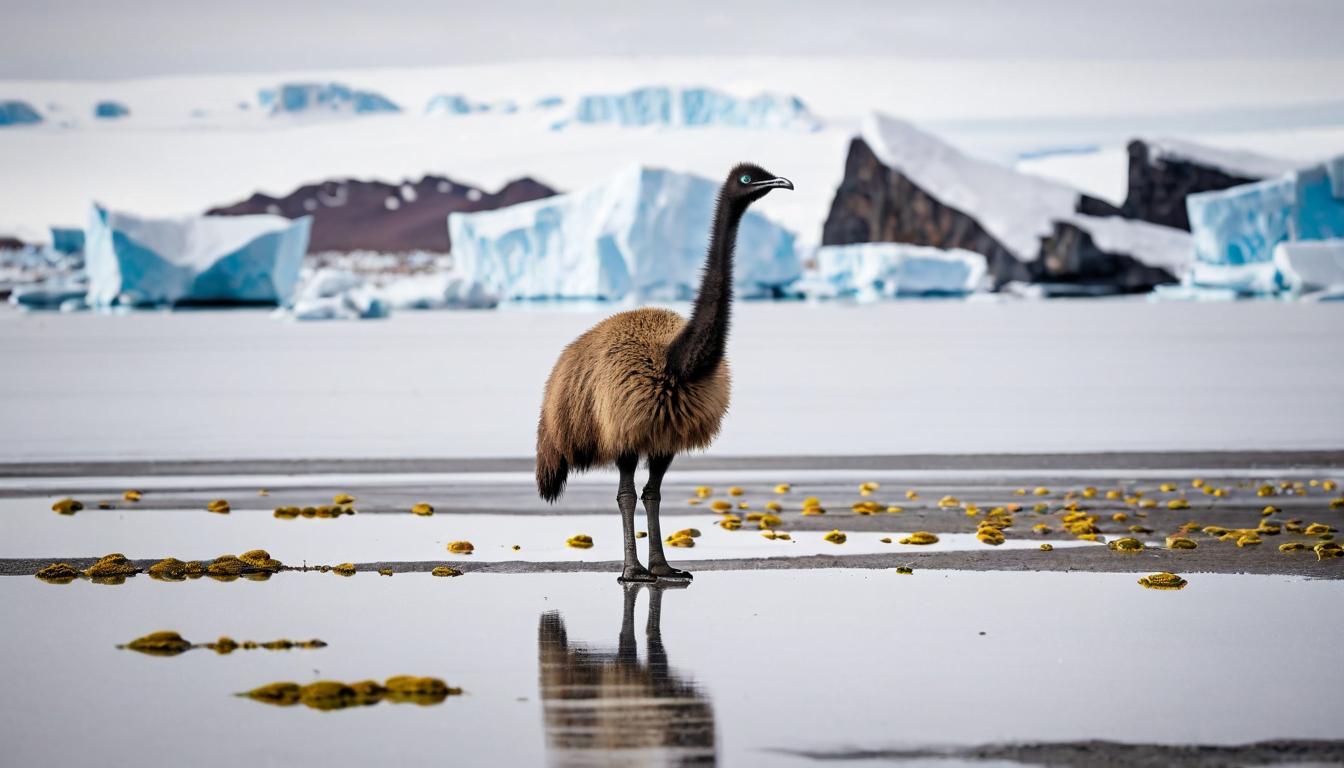
History's forgotten footnotes reveal equally strange tales. During the Great Emu War of 1932, Australia's military actually went to war against emus. Farmers in Western Australia, struggling with thousands of emus destroying crops, requested military assistance. The army deployed soldiers with machine guns, expecting quick victory. Instead, the emus proved surprisingly tactical, splitting into small groups and using the terrain for cover. After weeks of failed campaigns and public ridicule, the military withdrew, defeated by birds. Sometimes truth really is stranger than fiction.
Our own bodies harbor mysteries we're only beginning to understand. Your fingerprints aren't just for identification—they actually enhance your sense of touch. Those ridges create vibrations when they slide across surfaces, amplifying texture signals to your brain. This explains why we can feel such fine details. Meanwhile, your nose can remember up to 50,000 different scents, and scent memories last longer than visual or auditory ones. That's why a particular smell can instantly transport you back decades to a specific moment.
Language itself contains hidden histories. The word 'nightmare' has nothing to do with horses. It comes from the Old English 'mare,' meaning a demon or goblin believed to sit on people's chests while they slept, causing feelings of suffocation. The 'night' part was added later. Similarly, 'quarantine' originates from the Italian 'quaranta giorni' (forty days), referring to the period ships from plague-affected areas had to wait before docking in 14th-century Venice.
Even our planet holds secrets in plain sight. Antarctica is technically a desert—the world's largest, in fact. With annual precipitation of less than 8 inches along the coast and even less inland, it meets all desert criteria despite being covered in ice. Meanwhile, Canada has more lakes than all other countries combined, containing about 20% of the world's fresh water. And if you could drain the Pacific Ocean, you'd discover the largest mountain range on Earth—the Mid-Ocean Ridge, stretching 40,000 miles and covering 23% of Earth's total surface.
Food history reveals how accidents became institutions. The chocolate chip cookie was invented when Ruth Wakefield, owner of the Toll House Inn, ran out of baker's chocolate while making cookies. She substituted broken pieces of Nestlé semi-sweet chocolate, expecting them to melt. They didn't, and America's favorite cookie was born. Similarly, penicillin was discovered when Alexander Fleming noticed mold killing bacteria in a contaminated petri dish he'd left out before vacation. Sometimes the greatest discoveries happen when things don't go according to plan.
These stories remind us that curiosity reveals wonders everywhere—in our kitchens, our language, our history, and even in office supplies. The world is full of hidden connections and unexpected origins waiting to be discovered by anyone willing to look closer and ask 'why?' or 'how?' The most extraordinary truths often hide in the most ordinary places, proving that reality, when examined carefully, is more fascinating than any fiction we could invent.
The hidden histories and curious truths behind everyday things