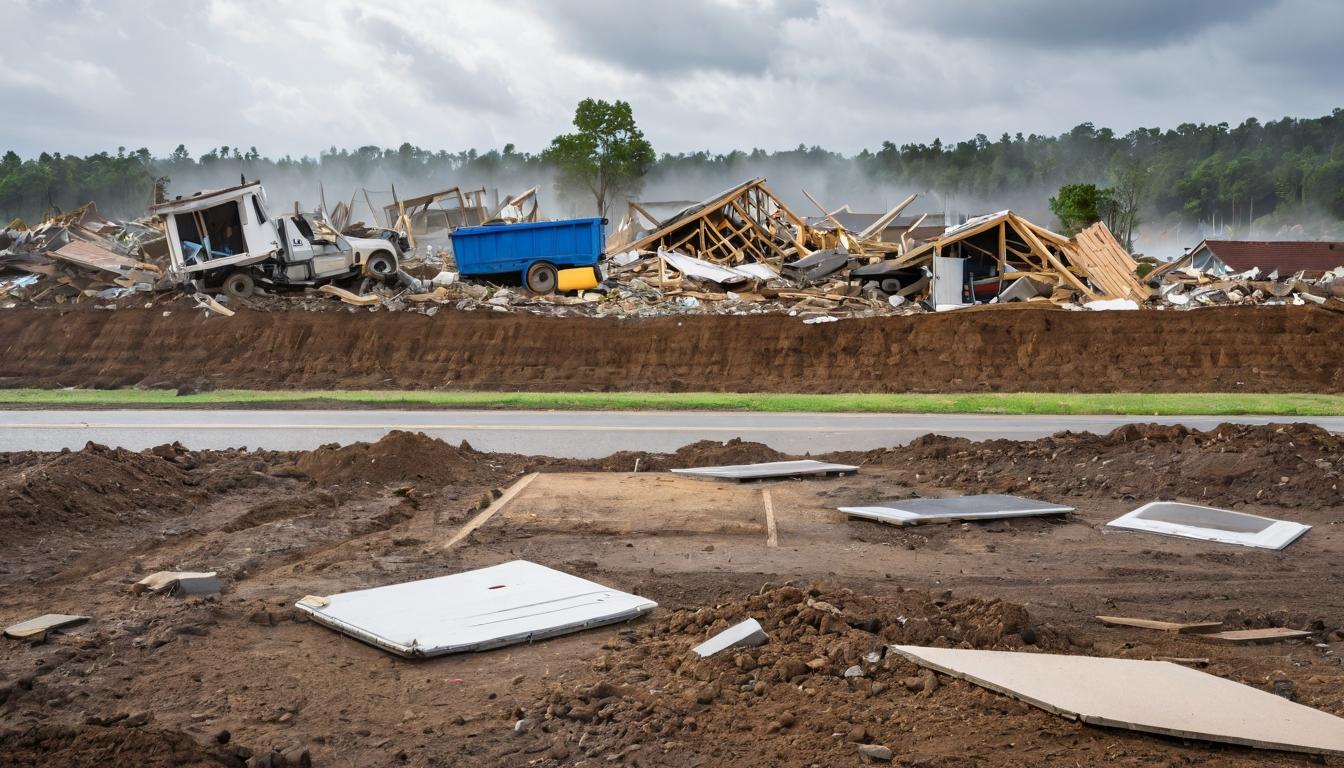
In the hushed corridors of global reinsurance firms and the sleek offices of insurtech startups, a quiet revolution is unfolding. Parametric insurance—once a niche product for catastrophic events—is quietly reshaping how businesses and communities recover from disasters. Unlike traditional policies that require lengthy claims adjustments and damage assessments, parametric triggers pay out automatically when predefined conditions are met, whether that's wind speeds exceeding 100 mph or earthquake magnitudes surpassing 7.0.
This shift represents more than just technological innovation; it's a fundamental rethinking of risk transfer. For decades, insurance has operated on a model of indemnification—you prove your loss, we pay your claim. The parametric approach flips this script, focusing instead on measurable parameters that correlate with loss. When Hurricane Fiona battered Puerto Rico, parametric policies triggered within days, providing immediate liquidity while traditional claims were still being tallied.
Yet beneath this promising surface lies a complex web of challenges. Basis risk—the gap between parametric triggers and actual losses—remains the industry's elephant in the room. A policy might trigger based on rainfall at a specific weather station while a business just miles away experiences minimal damage. Insurers are wrestling with how to minimize these discrepancies while maintaining the speed that makes parametric coverage so valuable.
Perhaps most intriguing is how parametric insurance is democratizing risk protection. Small island nations, agricultural cooperatives, and renewable energy projects that once struggled to secure affordable coverage are now finding parametric solutions within reach. The Caribbean Catastrophe Risk Insurance Facility has used parametric triggers for years, providing member nations with rapid payouts after hurricanes and earthquakes. Similar models are emerging for drought-stricken farmers and flood-prone communities.
Technology is accelerating this transformation at breakneck speed. Satellite imagery, IoT sensors, and blockchain smart contracts are creating more precise triggers and transparent payout mechanisms. Insurtech companies are developing parametric products for everything from flight delays to supply chain disruptions, expanding beyond natural catastrophes into operational risks.
But with innovation comes regulatory scrutiny. Insurance commissioners from California to Connecticut are grappling with how to classify and oversee these products. Are they insurance contracts or financial derivatives? How should they be priced and reserved? These questions aren't merely academic—they'll determine whether parametric insurance remains a specialty product or becomes mainstream.
The human dimension of this shift is equally compelling. Claims adjusters—those boots-on-the-ground professionals who've defined insurance response for generations—face an uncertain future. While parametric won't eliminate their role entirely, it will transform it, shifting focus from damage assessment to risk engineering and customer education.
Looking ahead, the convergence of climate change and parametric insurance creates both urgency and opportunity. As extreme weather events become more frequent and severe, the need for rapid recovery mechanisms grows exponentially. Parametric products could become essential tools for climate adaptation, providing financial resilience where traditional insurance markets retreat.
Yet for all its promise, parametric insurance isn't a panacea. It works best for clearly defined, measurable events—not for the complex, multifaceted losses that often characterize business interruptions or liability claims. The industry's challenge will be identifying where parametric solutions add genuine value versus where they create more problems than they solve.
What's clear is that the quiet revolution is gaining volume. From boardrooms to regulatory hearings, parametric insurance is moving from the periphery to center stage. How this story unfolds will shape not just insurance markets, but how societies worldwide prepare for and recover from the unexpected shocks that define our increasingly volatile world.
The silent revolution: How parametric insurance is quietly changing disaster recovery