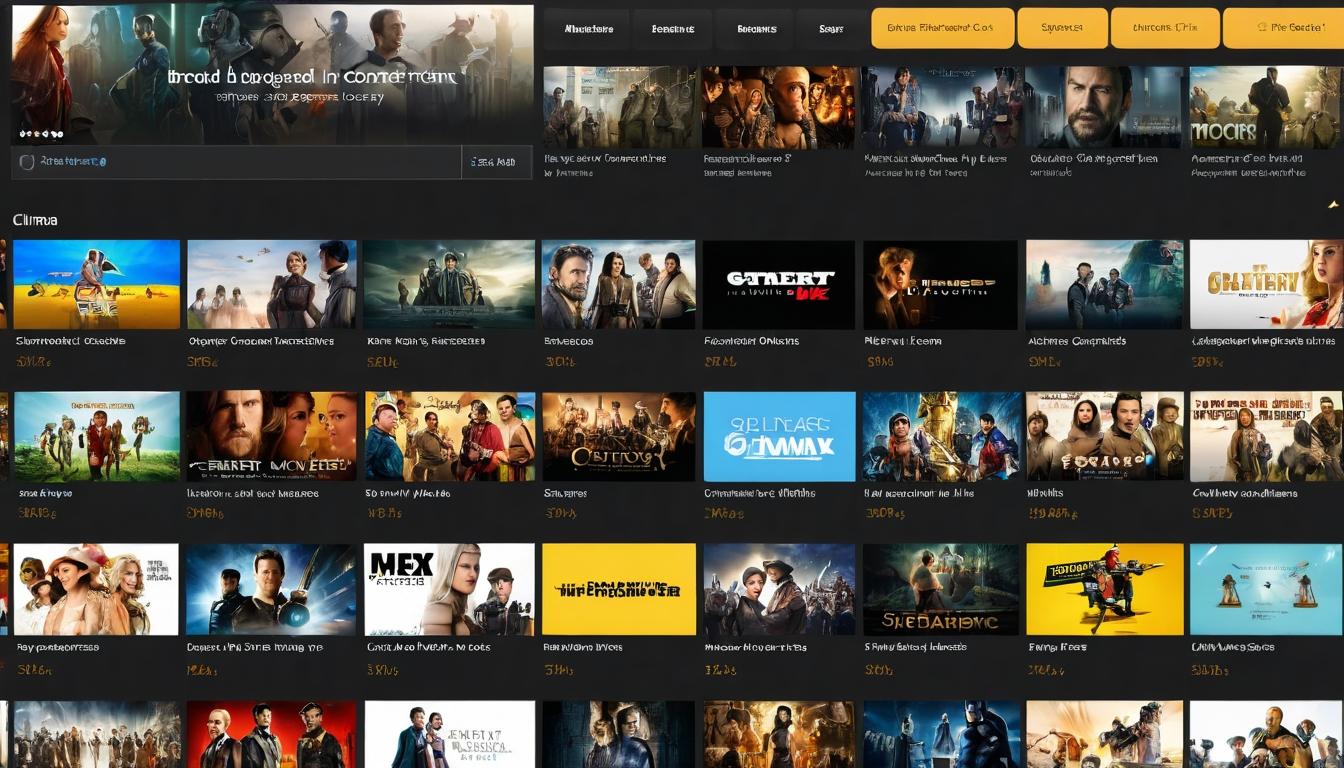
If you've scrolled through Netflix, Amazon Prime, or Disney+ lately, you might have noticed something peculiar. The same faces keep appearing. The same genres dominate. The same mid-budget thrillers with interchangeable plots. This isn't coincidence—it's calculation. Behind the glossy interfaces of our favorite streaming platforms, a silent war is being waged, one that's fundamentally altering the cinematic landscape in ways most viewers never see.
I spent three months talking to data scientists, studio executives, and independent filmmakers who've seen their projects vanish into algorithmic oblivion. What emerged was a picture of an industry increasingly governed not by creative vision, but by predictive analytics. Streaming services have become black boxes where algorithms determine not just what we watch, but what gets greenlit in the first place.
Take the case of 'Midnight in Marrakesh,' a romantic drama that nearly didn't exist. The script had everything—critical acclaim from early readers, an A-list director attached, and financing ready to go. Then the streaming data came back. According to the platform's algorithm, romantic dramas set in foreign locations underperformed by 23% compared to domestic settings. The project was shelved for eighteen months until someone had the bright idea to move the setting to Portland.
This isn't an isolated incident. One mid-level executive at a major studio, who spoke on condition of anonymity, described the new reality: 'We used to have passionate arguments about scripts. Now we have meetings where we stare at dashboards. If the algorithm says a historical drama about 18th century poets won't retain subscribers in the 18-34 demographic, that's it. Conversation over.'
But here's where it gets truly fascinating. The algorithms aren't just rejecting projects—they're creating bizarre new hybrid genres. I obtained internal documents showing how platforms are increasingly commissioning what they call 'algorithmically optimized content.' These are films designed from the ground up to tick specific boxes: 42 minutes of action sequences, romantic subplots that peak at exactly the 67-minute mark, character arcs that align with proven engagement patterns.
The result? A strange homogenization that's creating what one cinematographer called 'the beigeification of cinema.' Films are starting to feel eerily similar because, in many ways, they are. They're being built from the same algorithmic blueprint, with variations so slight they're barely noticeable to the casual viewer.
Yet, against all odds, a rebellion is brewing. A new wave of filmmakers has begun gaming the system. They're creating what appear to be algorithm-friendly films on the surface—the right runtimes, the approved genre mixes, the market-tested character types—but smuggling subversive content beneath the surface. It's cinematic resistance, and it's producing some of the most interesting work in years.
Director Sofia Chen, whose film 'Data Ghost' explores these very themes, explained her approach: 'We gave the algorithm what it wanted—a sci-fi thriller with a female lead and exactly three major action set pieces. But between those set pieces, we told a story about digital privacy, corporate surveillance, and the loss of human connection. The algorithm never saw it coming.'
The most surprising development? Some streaming platforms are starting to notice. Noticing, and quietly encouraging it. Because while algorithms are great at predicting what worked yesterday, they're terrible at predicting what will feel fresh tomorrow. The very homogenization they've created is beginning to depress engagement metrics, creating an ironic twist: the system designed to maximize views might be killing the golden goose.
What happens next will determine the future of film. Will we surrender completely to the algorithm, creating an endless stream of perfectly optimized, utterly forgettable content? Or will filmmakers, audiences, and even some brave executives find ways to preserve the messy, unpredictable magic that makes cinema matter? The answer might be hiding in your watch history right now, in the subtle patterns of what you skip, what you finish, and what you recommend to friends.
Because in the end, the most powerful algorithm isn't running on Amazon's servers or in Netflix's data centers. It's running in our collective imagination, in our hunger for stories that surprise us, challenge us, and remind us what it means to be human in an increasingly automated world. And that's one algorithm no streaming service has managed to crack—yet.
The hidden algorithm wars: How streaming services are secretly reshaping what movies get made