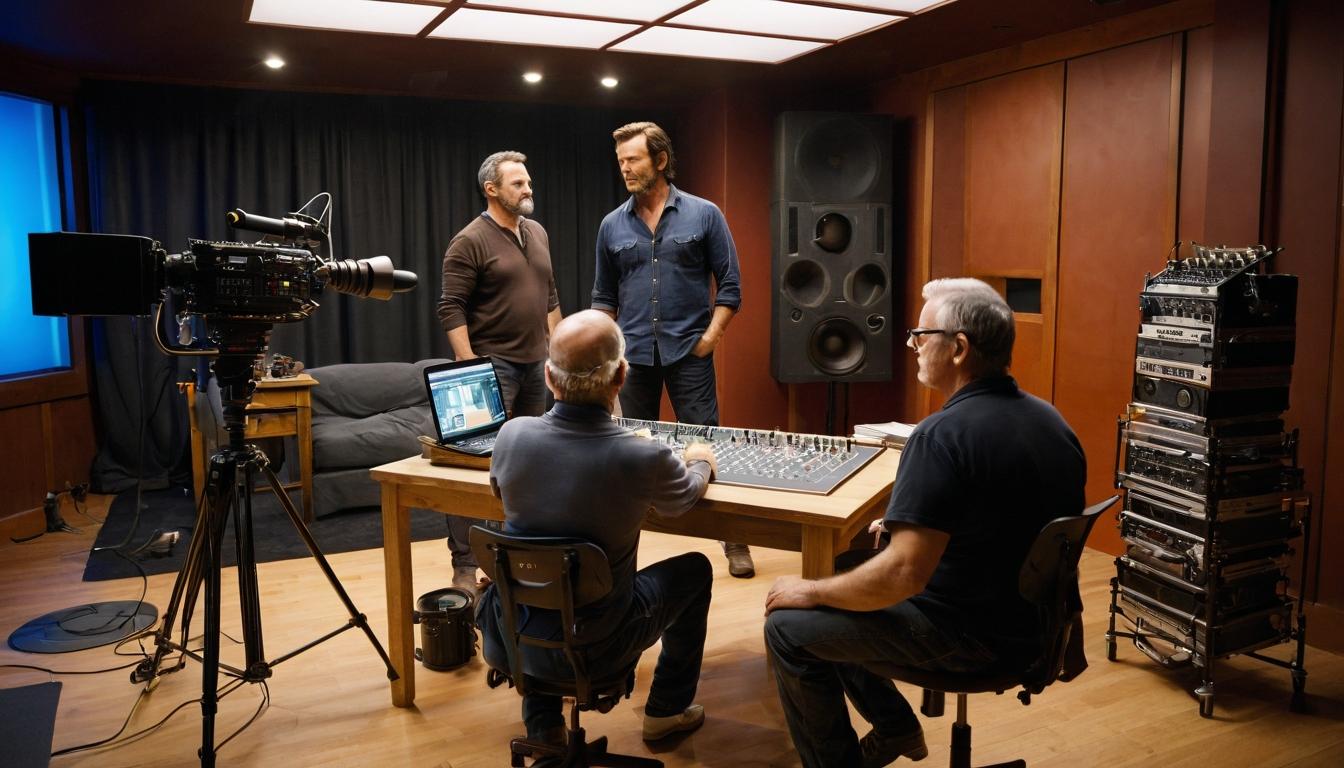
Walk into any theater lobby and you'll see them—the glossy posters with star-studded faces, the director's name in elegant type, the producer credits that signal prestige. What you won't see are the names of the people who actually built the worlds you're about to enter. While film journalism obsesses over box office numbers and celebrity gossip, a quiet revolution has been happening in the trenches of production design, sound engineering, and visual effects—a story that websites from IMDb to Variety consistently underreport.
Consider the case of 'Everything Everywhere All at Once.' While Michelle Yeoh's performance rightly earned accolades, few articles explored how production designer Jason Kisvarday and editor Paul Rogers constructed the film's chaotic multiverse. Their work wasn't just technical—it was philosophical, creating visual rules for infinite realities that audiences instinctively understood. This invisible architecture made the film's emotional beats land with devastating precision, yet their contributions remain footnotes in most coverage.
Sound design presents another blind spot in mainstream film discourse. When 'A Quiet Place' terrified audiences with its silence, the conversation focused on John Krasinski's direction and Emily Blunt's performance. What went largely unexamined was how supervising sound editors Ethan Van der Ryn and Erik Aadahl created a sonic landscape where every rustle felt like a gunshot. They didn't just remove sound—they weaponized absence, turning the theater itself into a character. This technical artistry fundamentally changed horror filmmaking, yet you'd be hard-pressed to find deep dives into their process on most entertainment sites.
Visual effects artists face perhaps the strangest paradox. Their work has never been more sophisticated or invisible. When Rachel Zegler's Snow White dances with CGI animals in the upcoming Disney remake, the effects team's challenge isn't making the creatures look real—it's making them feel emotionally present. The subtle eye movements, the weight of fur in motion, the way light catches digital feathers—these details separate convincing effects from magical ones. Yet these artists remain anonymous, their breakthroughs buried in technical forums rather than celebrated in mainstream film journalism.
Costume design represents another under-chronicled frontier. When Ruth Carter created the Wakandan fashions for 'Black Panther,' she wasn't just dressing characters—she was building a nation's visual history from scratch. Every bead pattern told a story, every fabric choice reflected cultural values. Her work did more than look beautiful—it made a fictional country feel historically real, giving weight to the film's political themes. This is world-building of the highest order, yet costume designers rarely receive the analytical attention given to directors or cinematographers.
Perhaps most surprisingly overlooked are the script supervisors—the human continuity machines who ensure that a film's reality remains consistent across months of shooting. When a character's emotional journey needs to track across 87 shooting days and three different locations, it's the script supervisor who maintains the throughline. Their notes become the film's memory, catching inconsistencies that would shatter audience immersion. In an era of fragmented shooting schedules and complex narratives, their role has evolved from notetaker to narrative guardian—a shift almost completely absent from film coverage.
The consequence of this coverage gap is more than just unfair credit distribution. It shapes what kinds of films get made and how they're valued. When only directors and stars receive serious critical attention, the industry naturally prioritizes those roles. The result is a system that undervalues technical artistry while overvaluing marketable names. This isn't just bad journalism—it's bad for cinema.
Some publications are beginning to notice. IndieWire's 'Craft Considerations' series and Variety's 'Artisans' section offer glimpses into this hidden world, but they remain niche features rather than central concerns. The average filmgoer checking Rotten Tomatoes or Screen Rant would never know that the year's most innovative filmmaking might be happening in a sound studio or costume workshop rather than a director's chair.
What would change if we paid attention? We might get more films that prioritize immersive world-building over star power. We might see technical artists receiving creative control rather than just executing visions. Most importantly, we might develop a richer vocabulary for discussing what actually makes films work—moving beyond plot summaries and performance reviews to understand cinema as the collaborative art it truly is.
The next time a film transports you to another world, pause during the credits. Watch the hundreds of names scroll by—the texture artists, the foley walkers, the color timers. These aren't just technicians. They're the invisible architects of our shared dreams, building realities from nothing. Their stories remain the great untold narrative of modern cinema, waiting for journalists brave enough to look beyond the marquee.
The invisible architects: how below-the-line talent quietly reshapes modern cinema