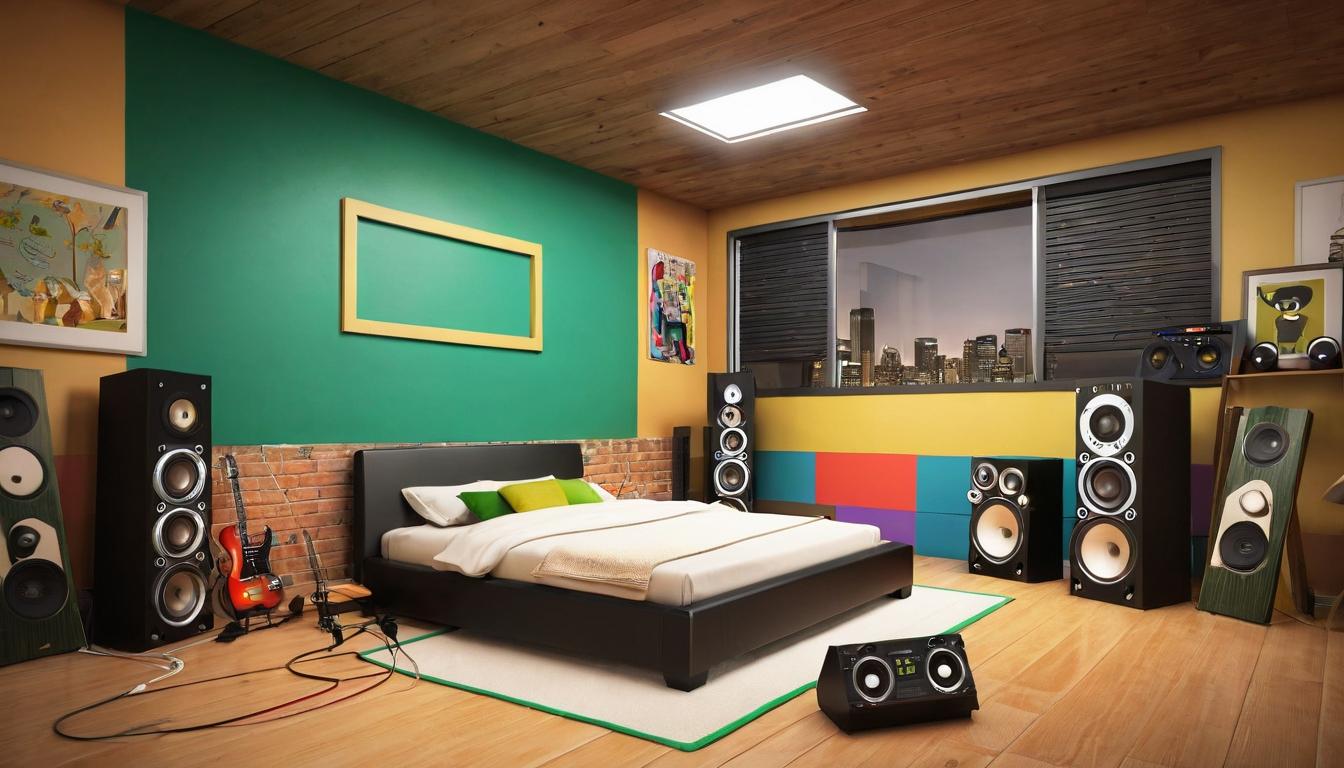
In the dim glow of laptop screens across Brooklyn apartments, Los Angeles garages, and London basements, a quiet revolution is brewing. While mainstream charts cycle through familiar pop formulas and algorithm-friendly hits, an entire ecosystem of musicians has quietly built parallel economies, communities, and artistic movements that operate outside traditional industry structures. This isn't just about SoundCloud rappers or TikTok virality—it's about a fundamental shift in how music is created, distributed, and valued in the digital age.
What began as pandemic-era necessity has evolved into a permanent reimagining of creative workflows. Artists who once needed expensive studio time now craft Grammy-nominated albums entirely in their bedrooms using software that costs less than a monthly car payment. The barrier between creator and consumer has dissolved so completely that fans now routinely participate in songwriting through social media polls, crowdfund album productions, and even influence mixing decisions through Discord communities. This collaborative intimacy has created fanbases with investment levels previously reserved for cult followings.
Meanwhile, the tools of distribution have democratized to the point where any artist with a smartphone can bypass gatekeepers entirely. Streaming platforms' algorithmic playlists might seem like the new radio, but savvy musicians are building direct relationships through platforms like Bandcamp, Patreon, and even custom apps. The most interesting development isn't the technology itself, but how artists are using it to reclaim ownership—not just of their masters, but of their entire creative narratives.
This DIY ethos extends to live performance in surprising ways. With touring costs skyrocketing, innovative artists are experimenting with hybrid models: intimate living room concerts streamed globally, VR performances that transcend geography, and multi-artist collaborative tours that share resources. The most successful aren't trying to replicate pre-pandemic touring—they're inventing entirely new formats that prioritize sustainability over scale.
Perhaps most significantly, these underground movements are challenging music's very economic foundations. Blockchain experiments, while still niche, point toward futures where artists receive royalties instantly and transparently. Direct-to-fan sales are becoming significant revenue streams for mid-tier artists. And community-supported models allow musicians to focus on art rather than chasing viral moments.
Yet this renaissance faces genuine challenges. Platform dependency remains a vulnerability—an algorithm change can decimate an artist's reach overnight. The sheer volume of new music makes discovery increasingly difficult despite improved tools. And the psychological toll of constant self-promotion in attention-scarce environments has created what some psychologists call 'creator burnout syndrome.'
What emerges from this tension is perhaps the most exciting development: new genres and forms that couldn't exist in traditional industry frameworks. Hyperpop's digital maximalism, ambient's streaming-era resurgence, and the global fusion of regional sounds all thrive in this decentralized environment. These aren't just musical styles—they're cultural responses to technological possibility.
The most forward-thinking institutions are taking notice. Universities now offer courses in DIY music entrepreneurship. Forward-thinking labels operate more like artist cooperatives than traditional corporations. And festivals increasingly program lineups that reflect these underground networks rather than just chart positions.
Ultimately, this underground renaissance represents something more profound than technological change. It's about reclaiming music as a communal, accessible art form rather than purely commercial product. The bedroom producers and DIY artists shaping this movement aren't waiting for industry permission—they're building the future from the ground up, one track, one community, and one innovative model at a time. Their success suggests that music's most vital future may not be in corporate boardrooms, but in the creative spaces where technology meets unfiltered human expression.
The underground renaissance: how bedroom producers and DIY artists are reshaping music's future