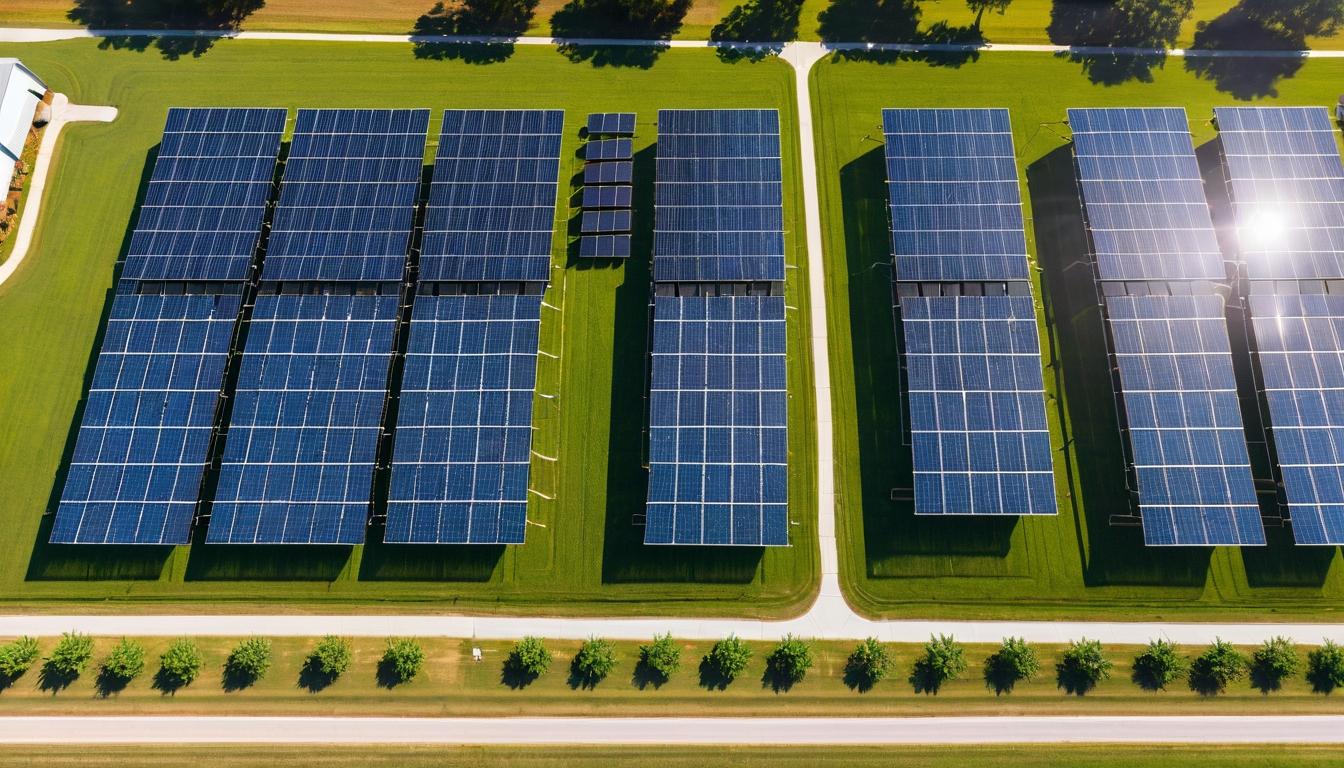
If you listen carefully, you can hear it—a low hum of change sweeping across America's rooftops, fields, and power grids. It's not the dramatic crash of collapsing industries or the blaring trumpets of political announcements. Instead, it's the subtle sound of solar panels converting sunlight into electricity, one kilowatt-hour at a time, while the energy establishment barely notices the ground shifting beneath its feet.
What started as a niche technology for environmental enthusiasts has become something far more interesting: a quiet revolution that's rewriting the rules of energy economics. While headlines chase the latest battery breakthrough or fusion promise, ordinary Americans are installing solar at record rates—not because they're told to, but because the numbers finally make sense. The math has become undeniable, and it's creating a distributed energy network that looks nothing like the centralized systems of the past century.
Look at Texas, of all places. The oil-and-gas heartland now leads the nation in solar installations, with projects popping up like bluebonnets after a spring rain. Farmers who once relied solely on cattle and crops are now harvesting sunlight alongside their traditional yields, creating revenue streams that buffer against drought and market volatility. This isn't about ideology; it's about pragmatism. When the sun shines for free and the technology to capture it keeps getting cheaper, even the most conservative calculations start pointing toward panels.
Meanwhile, utilities are facing an existential puzzle they never anticipated. For decades, their business model was straightforward: build big power plants, string wires to customers, and charge for every kilowatt-hour delivered. Now they're watching as their best customers—the ones with large homes and high energy use—become their smallest buyers, generating their own power and buying less from the grid. Some utilities are fighting this trend with fees and regulations. Others are embracing it, recognizing that distributed solar can actually strengthen the grid if managed intelligently.
Behind the scenes, a technological arms race is unfolding that most consumers never see. Solar panel efficiency has climbed steadily while prices have plummeted—the classic technology adoption curve playing out in real time. But the real story isn't just about cheaper panels; it's about the ecosystem developing around them. Smart inverters that can stabilize grid voltage, monitoring software that predicts maintenance needs before failures occur, and financing models that remove upfront costs have collectively removed the barriers that once kept solar as a luxury item.
Perhaps most surprisingly, this revolution isn't happening evenly across the country. While California gets the headlines, the Midwest and Southeast are seeing explosive growth as manufacturing costs drop and installation expertise spreads. States with historically low electricity prices are now reaching 'grid parity'—the point where solar costs match or beat utility rates—creating economic tipping points that policy debates never could. This geographic spread matters because it means solar is no longer dependent on specific state incentives; it's becoming self-sustaining through pure economics.
The human stories within this transition are where the real drama lies. Meet Maria Rodriguez, a retired teacher in Florida who installed solar panels last year not to save the planet, but to fix her budget. 'My Social Security check wasn't stretching far enough with the AC running all summer,' she told me over the phone, the pride evident in her voice. 'Now my electric bill is basically zero from March through October. That's groceries. That's medicine. That's peace of mind.' Her story repeats thousands of times daily, in red states and blue states, in cities and rural areas, creating a political constituency that transcends traditional energy divides.
Of course, challenges remain. The duck curve—that pesky phenomenon where solar production peaks during midday but demand spikes in the evening—still puzzles grid operators. Interconnection queues for new projects stretch for years in some regions. And not every rooftop is suitable for panels, leaving renters and apartment dwellers largely excluded from the benefits. Yet solutions are emerging, from community solar programs that let multiple households share a single installation to virtual power plants that aggregate home batteries into grid resources.
What's often missed in the technical discussions is the cultural shift underway. Solar is becoming normal. It's no longer the weird neighbor with panels on their roof; it's the soccer mom, the small business owner, the factory manager looking to cut operating costs. This normalization matters more than any single technological breakthrough because it changes how we think about energy itself—not as something produced far away by experts, but as something we can all participate in producing.
As I traveled across six states researching this piece, the pattern became clear: we're witnessing the early stages of energy democracy. Not the kind announced with speeches and legislation, but the kind that grows quietly through individual decisions that collectively reshape an industry. The utilities, regulators, and policymakers are scrambling to catch up with changes already happening at the grassroots level, in suburban backyards and on rural barn roofs.
The revolution won't be televised—it'll be metered. One household at a time, one business at a time, America is quietly taking control of its energy future. And the most remarkable part? Most people doing it aren't trying to start a revolution at all. They're just trying to save money, gain independence, or leave something better for their kids. Sometimes the biggest changes come not from grand plans, but from millions of small decisions adding up to something nobody anticipated.
The quiet revolution: How solar energy is quietly transforming America's power grid