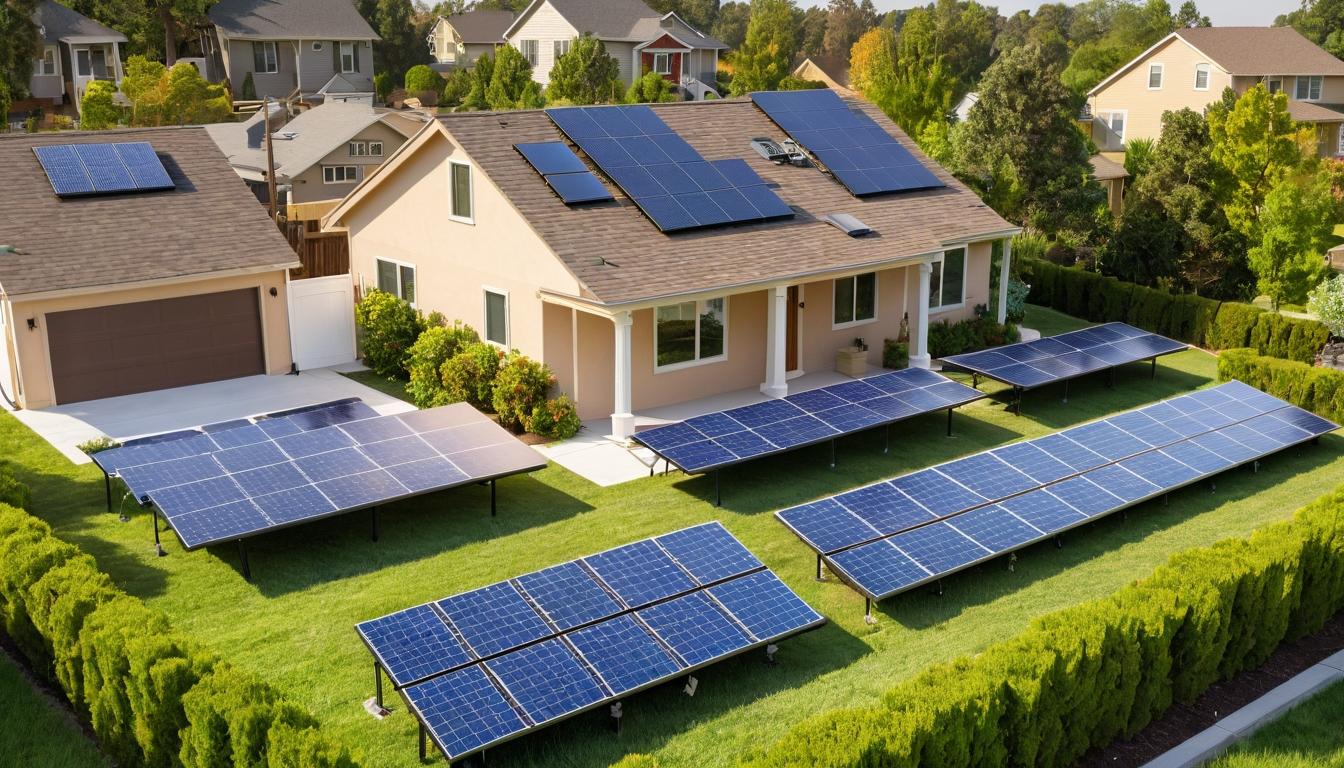
If you've driven through any American suburb lately, you might have noticed something subtle but significant. It's not in the headlines, not on the evening news, but it's spreading across rooftops like morning light—solar panels are becoming as common as satellite dishes once were. This isn't just about clean energy; it's about a quiet revolution in how Americans power their lives, one shingle at a time.
What's driving this transformation isn't government mandates or corporate initiatives alone, though they help. It's homeowners making surprisingly savvy financial decisions. The math has shifted dramatically in recent years. Where solar once required hefty subsidies to make sense, today's systems often pay for themselves within 5-8 years in sun-rich states. The secret? Plummeting panel costs combined with rising electricity rates have created what analysts call 'the solar sweet spot'—where going solar saves money from day one.
But here's where it gets interesting. The real story isn't in the panels themselves, but in what's happening behind them. New microinverter technology means each panel operates independently, so shading on one section doesn't cripple the whole system. Battery storage, once a luxury, is becoming standard in new installations. Homeowners aren't just generating power; they're building personal power plants that can keep the lights on during grid outages.
Manufacturers are playing a different game too. The race isn't for the highest efficiency anymore—it's for durability and aesthetics. Solar shingles that blend seamlessly with traditional roofing materials are gaining traction, particularly in historic districts and upscale neighborhoods where visible panels face resistance. Companies are offering 25-year warranties that cover not just performance, but weather damage and installation integrity.
Financing has undergone its own revolution. Where leases once dominated, today's market favors ownership through solar loans with terms that match the system's lifespan. The result? Homeowners capture all the financial benefits rather than sharing them with third-party companies. Community solar programs are expanding too, allowing renters and those with unsuitable roofs to buy into shared solar farms.
Perhaps most surprisingly, solar is becoming a real estate asset rather than a liability. Multiple studies now show solar-equipped homes sell faster and at higher prices than comparable non-solar homes. Appraisers are developing standard methods to value solar installations, and mortgage lenders are increasingly factoring energy savings into loan qualifications.
The environmental impact extends beyond carbon reduction. Distributed solar reduces strain on aging grid infrastructure during peak demand periods. In states like California and Texas, rooftop solar has helped prevent rolling blackouts during heat waves by reducing demand on overtaxed power plants. This 'virtual power plant' effect is becoming so valuable that some utilities now pay homeowners for their excess generation.
Yet challenges remain. Interconnection delays can stretch for months in some regions as utilities struggle to process the flood of solar applications. Some homeowner associations still resist visible installations, though state laws increasingly protect solar rights. And while federal tax credits remain in place through 2032, their step-down schedule creates periodic buying rushes.
Looking ahead, the next frontier isn't just more solar—it's smarter solar. Systems that communicate with smart home devices to optimize energy use, electric vehicle chargers that coordinate with solar production, and AI-powered software that predicts generation based on weather patterns. The humble rooftop is becoming a sophisticated energy management platform.
This quiet revolution won't stay quiet for long. As electricity prices continue their upward climb and solar costs keep falling, what's now a trend will become the norm. The American rooftop is being reimagined—not just as shelter from the elements, but as an active participant in the country's energy future. The panels may be silent, but their impact speaks volumes about where we're headed.
The hidden revolution: How solar panels are quietly transforming American rooftops