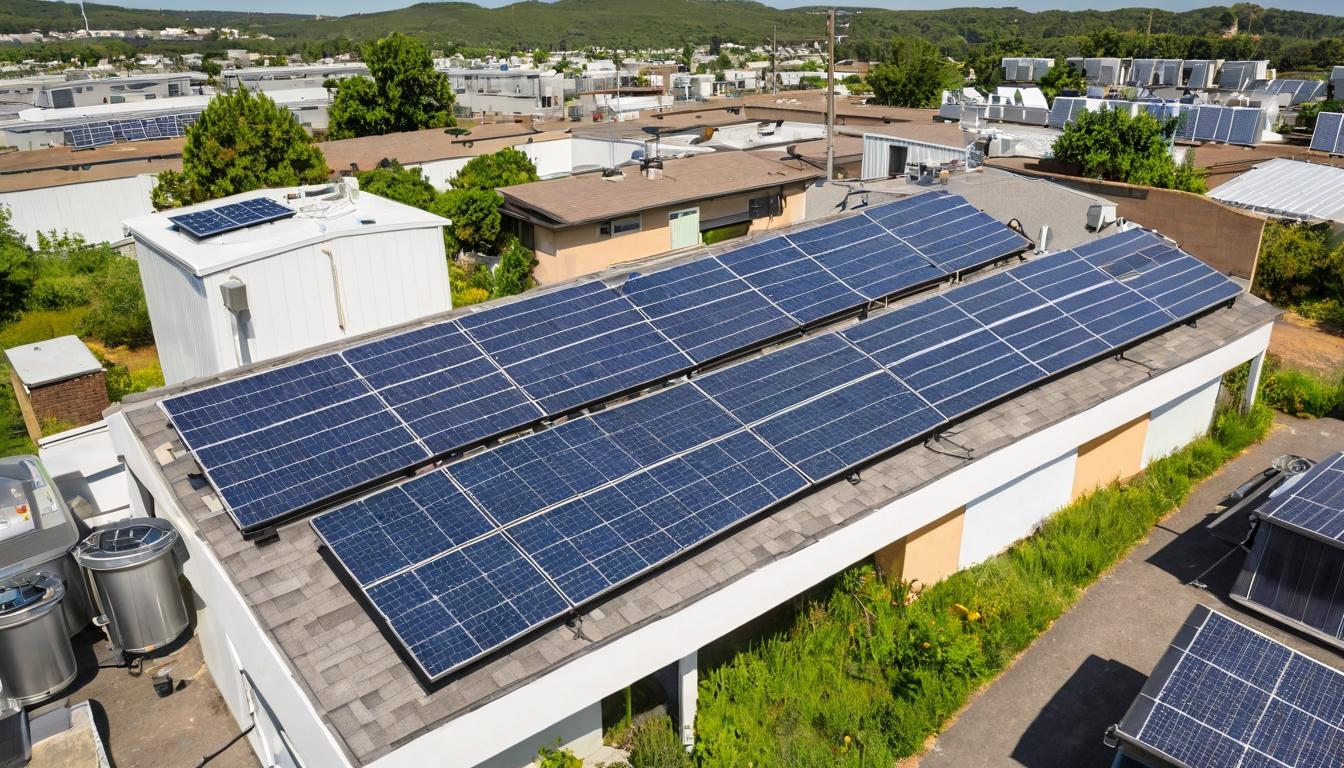
While solar panels gleam on rooftops across America, a parallel revolution is unfolding in the shadows—one that involves recycling plants, legal battles, and community organizers fighting for energy democracy. The clean energy transition isn't just about installing more panels; it's about confronting the messy realities of what happens when technology meets human systems.
Walk through the doors of a solar panel recycling facility, and you'll find yourself in an industrial ballet of deconstruction. Workers carefully separate aluminum frames from glass, silicon cells from plastic backsheets, and copper wiring from junction boxes. This isn't waste management—it's resource recovery on an industrial scale. With millions of panels reaching end-of-life in the coming decade, recycling operations are quietly becoming the backbone of solar's circular economy. The process reveals something crucial: solar's environmental promise only holds if we handle the entire lifecycle, not just the sunny installation photos.
Meanwhile, in community halls from California to Massachusetts, a different kind of solar story is unfolding. Community solar projects—shared arrays that allow multiple households to benefit from a single installation—are facing regulatory hurdles that would make a labyrinth seem straightforward. The concept is simple: not everyone can install panels, but everyone should access clean energy. The execution? That's where lawyers earn their retainers. Interconnection rules, billing mechanisms, and utility resistance create a maze that community organizers navigate with determination and spreadsheets.
Look closer at those utility battles, and you'll find the real frontline of energy democracy. Investor-owned utilities, facing declining revenues as more customers generate their own power, are fighting back with fees and regulations that critics call 'solar taxes.' The technical term is 'net metering reform,' but the human impact is measured in delayed solar projects and frustrated homeowners. This isn't just policy—it's a power struggle literally about power, with community advocates pushing for what they call 'energy justice' while utilities defend what they term 'grid fairness.'
Beneath these surface conflicts runs an invisible current: the digital transformation of solar. Smart inverters, monitoring software, and AI-powered optimization tools are turning solar arrays from passive generators into intelligent grid participants. This technology allows panels to respond to grid needs, stabilize voltage, and even prevent blackouts. The implications are profound—solar isn't just replacing fossil fuels; it's reinventing how grids operate. Yet this digital layer brings its own challenges, from cybersecurity concerns to the 'digital divide' between sophisticated commercial systems and basic residential setups.
Perhaps most surprisingly, the solar revolution is reshaping American manufacturing in unexpected ways. While panel production largely moved overseas years ago, a new ecosystem of supporting industries is emerging stateside. Racking manufacturers, power electronics factories, and specialized glass producers are creating jobs in regions hungry for economic revitalization. This isn't the solar manufacturing of old—it's smarter, more automated, and integrated with other clean technologies like battery storage and electric vehicle charging.
What ties these disparate threads together is a fundamental shift in how we think about energy. Solar is no longer just an alternative; it's becoming the baseline. This transition reveals tensions between centralized and distributed systems, between old energy monopolies and new energy democracies, between technological optimism and practical constraints. The panels themselves are almost the simplest part—it's the human systems around them that require reinvention.
As the industry matures, the most interesting stories aren't about efficiency records or installation milestones. They're about the retired teacher fighting her utility for fair compensation, the engineer designing recyclable panels from the start, the community organizer building solar co-ops in low-income neighborhoods, and the factory worker assembling inverters in a Midwest town. These are the human faces of an energy transition that's as much about social change as technological advancement.
The solar revolution, it turns out, isn't just happening on rooftops. It's unfolding in courtrooms, recycling centers, community meetings, and factory floors. And like any real revolution, it's messy, contested, and profoundly human—which makes it far more interesting than any simple success story could ever be.
The solar revolution's hidden battles: from panel recycling to community power struggles