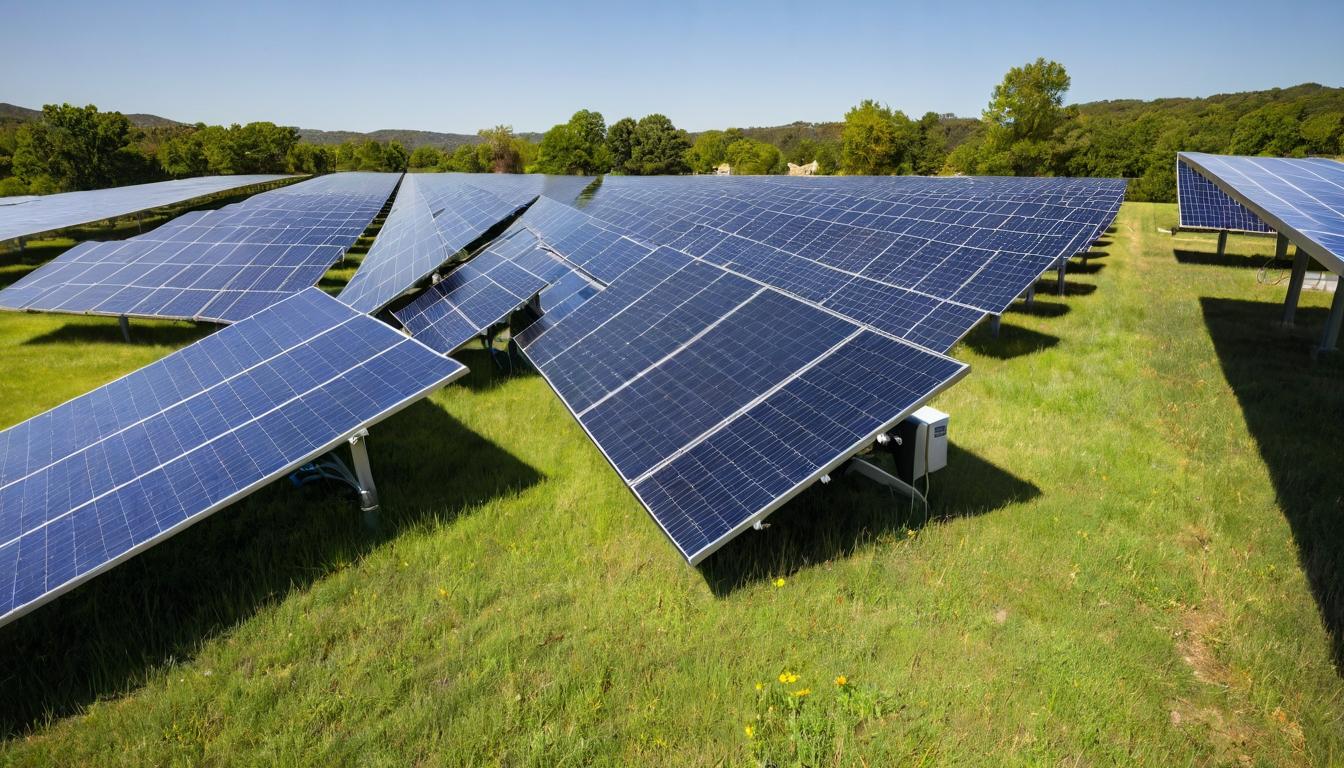
In a nondescript industrial park outside Cleveland, something remarkable is happening. Not with flashy new technology or billion-dollar investments, but with something far more revolutionary: ordinary people taking control of their energy future. This is the world of community solar, and it's quietly dismantling decades of energy orthodoxy.
While utility executives debate grid modernization and politicians argue about climate targets, a grassroots movement has been building momentum in the shadows. Community solar projects—where multiple participants share the benefits of a single solar array—have grown by over 100% annually for the past five years. Yet you won't find this story on the front pages of major newspapers or in prime-time news segments. The real energy revolution isn't happening in corporate boardrooms; it's happening in church basements, community centers, and suburban backyards.
What makes this movement particularly fascinating isn't just the technology—it's the economics. Traditional solar adoption has followed a predictable pattern: wealthier homeowners with suitable rooftops install panels, while renters, low-income households, and those with shaded properties watch from the sidelines. Community solar shatters this paradigm. For the first time, a retired teacher in an apartment building can participate in solar energy. A small business owner with a historic property can benefit from clean power. A family living under the canopy of century-old trees can finally access renewable energy.
But here's where the story gets really interesting: the regulatory battles happening behind the scenes. In state after state, utilities are fighting community solar with every tool at their disposal. They're not just opposing it; they're creating labyrinthine regulations designed to make participation nearly impossible. In some states, the application process requires more paperwork than applying for a small business loan. In others, utilities have successfully limited project sizes to ensure they never achieve meaningful scale.
Yet despite these obstacles, community solar keeps growing. Why? Because the economics are becoming impossible to ignore. A recent study found that community solar subscribers save an average of 10-15% on their electricity bills. In an era of rising energy costs, that's not just pocket change—it's economic survival for many families. More importantly, these projects create local jobs, keep energy dollars circulating in the community, and build resilience against grid failures.
The most compelling aspect of this story might be what it reveals about our energy system's fundamental flaws. For decades, we've accepted that electricity should come from distant power plants through complex transmission networks controlled by a handful of companies. Community solar challenges this entire model. It suggests that energy generation can be local, democratic, and responsive to community needs rather than shareholder demands.
In Minnesota, a coalition of farmers, environmentalists, and consumer advocates has built one of the nation's most successful community solar programs—not through legislative mandates, but through persistent organizing and creative problem-solving. In New York, community solar is becoming a tool for environmental justice, with projects specifically designed to benefit low-income neighborhoods that have historically borne the brunt of pollution from conventional power plants.
What's emerging is a new energy landscape that looks nothing like the old one. Instead of centralized control, we're seeing distributed networks. Instead of passive consumption, we're seeing active participation. Instead of energy as a commodity, we're seeing energy as a community resource. This isn't just about kilowatt-hours; it's about power in the most fundamental sense—who has it, who controls it, and who benefits from it.
The resistance from established interests is predictable, but it's also revealing. When utilities spend millions lobbying against community solar legislation, they're not just protecting their business model—they're defending a worldview. They're saying that ordinary people shouldn't have a say in their energy future. They're insisting that expertise should remain concentrated in corporate headquarters rather than distributed throughout communities.
Meanwhile, in those church basements and community centers, people are building something different. They're creating energy systems that reflect their values: local, democratic, sustainable, and equitable. They're proving that another way is possible, not in some distant future, but right now. They're not waiting for permission or perfect technology; they're using the tools available today to build the energy system they want tomorrow.
This quiet revolution won't make headlines like the latest fusion breakthrough or massive offshore wind farm. But it might be more important than all of them combined. Because while technology gives us new ways to generate energy, community solar gives us new ways to think about energy—not as something that happens to us, but as something we create together.
The quiet revolution: how community solar is rewriting the energy rulebook