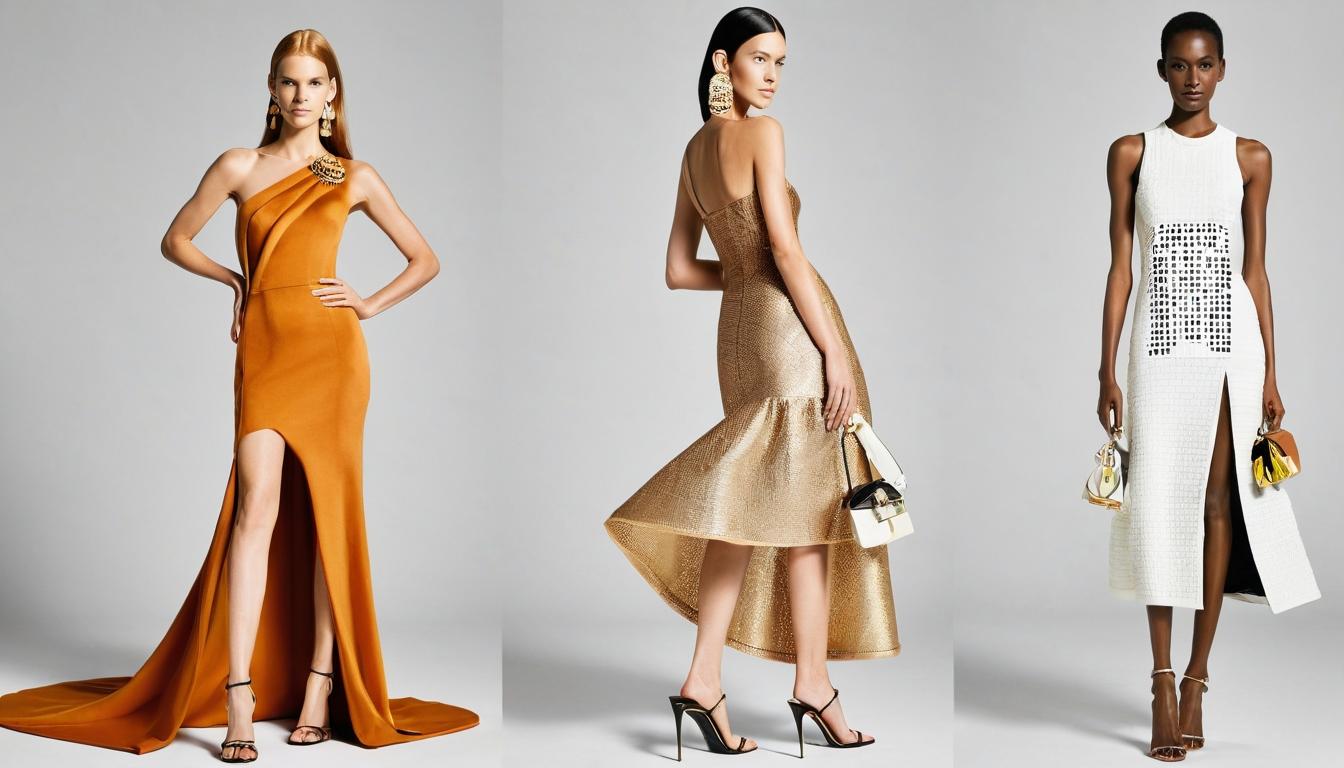
In the polished corridors of Milan, Paris, and New York, fashion houses maintain their gleaming facades—the seasonal spectacles, the celebrity-studded front rows, the meticulously crafted brand narratives. But beneath the surface, a tectonic shift is occurring, one that’s quietly rewriting the rules of what luxury means and who gets to define it. This isn’t about streetwear’s loud takeover or sustainability’s moral high ground. It’s about a more profound, almost subterranean, recalibration of power, creativity, and value. The real story isn’t on the runway; it’s in the studios, the ateliers, and the digital backchannels where a new generation is building a different kind of fashion empire.
For decades, the industry operated on a rigid, top-down model. Designers were anointed by established houses or, in rare cases, launched with astronomical backing. The path was narrow, guarded by gatekeepers. Today, that path has splintered into a thousand directions. The most compelling new voices aren’t necessarily the ones with the biggest PR budgets. They are the pattern cutters who’ve gone rogue, the textile archivists turned designers, the stylists who’ve built cult followings before ever producing a garment. They operate in a liminal space—part insider, part outsider—leveraging institutional knowledge while subverting its hierarchies. Their luxury isn’t defined by a logo or a price tag, but by specificity, narrative, and a palpable sense of authorship that mass production cannot replicate.
This shift is fueled by a new kind of consumer, one that is radically informed and deeply skeptical of traditional marketing. They don’t just buy a product; they invest in a micro-culture. They follow the artisan who hand-dyes fabrics using forgotten techniques on Instagram. They read deep-dive Substack newsletters about the geopolitical history of merino wool. They value the ‘why’ as much as the ‘what.’ This has created a fertile ground for businesses built on intimacy and vertical integration. We’re seeing designers who control every stitch, sell directly to their audience, and communicate with a transparency that feels revolutionary compared to the opaque operations of conglomerates. The relationship is peer-to-peer, not brand-to-consumer.
The materiality of fashion is being re-examined in this quiet revolution. It’s no longer just about the finest silk or the softest cashmere. It’s about provenance with a story—linen grown and woven in a specific region of Italy, deadstock military canvas repurposed from the 1970s, innovative biomaterials developed in collaboration with scientists. The object becomes a document of process, place, and partnership. This focus on material intelligence allows small-scale makers to compete not on volume, but on depth and integrity. The garment becomes an artifact, carrying within it layers of meaning that transcend seasonal trends.
Perhaps the most significant change is the redefinition of the fashion ‘collective.’ The old model was solitary genius—the star designer in their ivory tower. The new model is porous, collaborative, and networked. These emerging players form loose, agile constellations. A photographer, a ceramicist, a perfumer, and a designer might come together for a one-off project, creating a unified world that feels richer than any single brand could achieve alone. They share resources, audiences, and intellectual capital. This ecosystem approach builds resilience and fosters a culture of mutual aid over cutthroat competition. Success is measured in cultural capital and creative freedom as much as in sales figures.
This underground movement presents an existential question for the legacy luxury houses: adapt or become irrelevant. Some are responding by creating incubator programs or acquiring these nascent brands, attempting to bottle the elusive ‘authenticity.’ But the very nature of this revolution—its distributed, anti-corporate heart—resists easy co-option. The power is decentralizing. The future of fashion may not be dominated by a handful of mega-brands, but by a vibrant, ever-evolving network of highly specialized ateliers and creative cells. They are proving that in an age of saturation, the ultimate luxury is not just rarity, but resonance—a genuine, intelligible connection between maker, material, and wearer. The revolution won’t be televised from a fashion week tent. It’s being stitched, woven, and coded in studios you’ve never heard of, and its influence is already everywhere you look.
The quiet revolution: How fashion's underground is reshaping luxury from the inside out