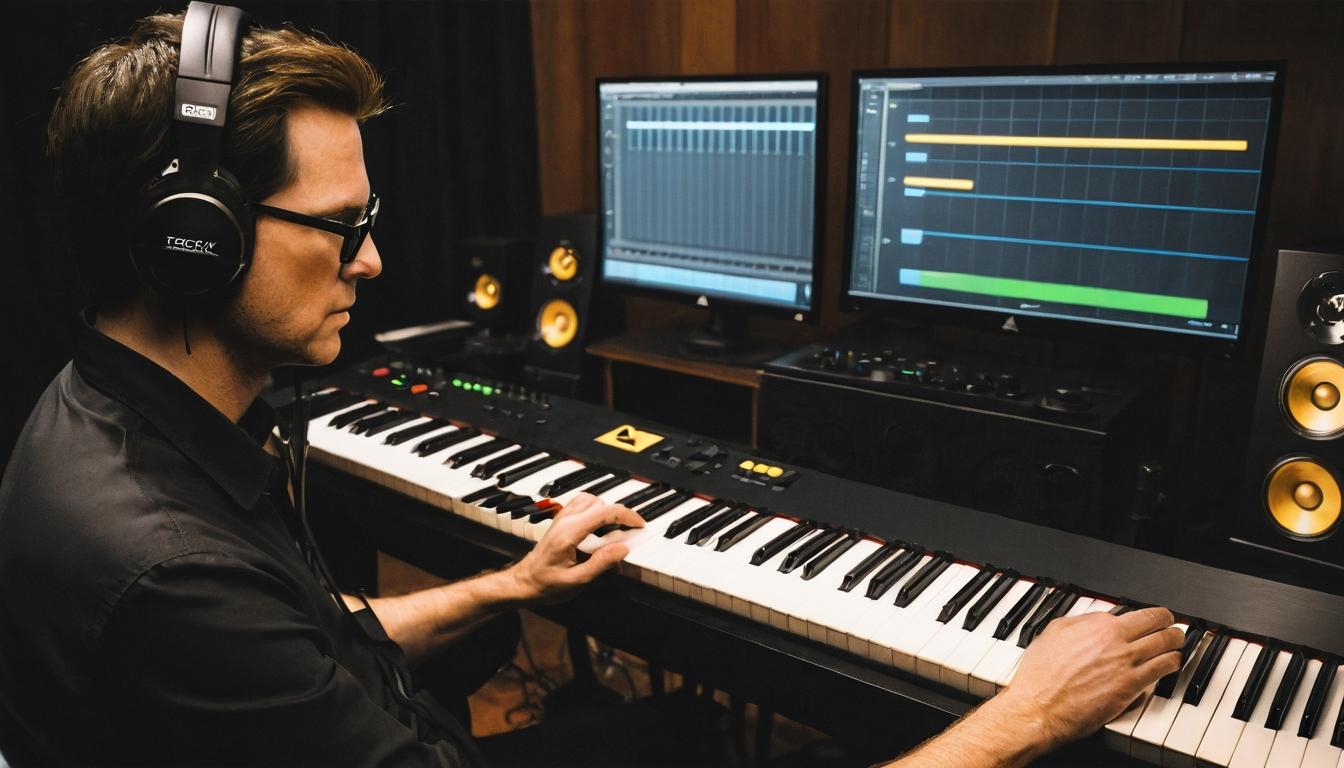
The velvet rope separating Hollywood's scoring stages from the world of interactive entertainment has quietly vanished. While film music publications traditionally focus on John Williams' latest symphony or Hans Zimmer's bombastic trailers, a seismic shift is occurring in plain sight—one that began not in Los Angeles, but in Tokyo, Stockholm, and Helsinki. Video game composers, once relegated to chiptune nostalgia, are now crafting scores so sophisticated they're forcing film composers to reconsider their entire toolkit.
Walk into any major game studio today and you'll find orchestras larger than those recording for mid-budget films. When Hildur Guðnadóttir won an Oscar for 'Joker,' few noted she'd previously composed for the video game 'Battlefield 1'—a training ground for her immersive approach. Meanwhile, Austin Wintory's 'Journey' score became the first video game nomination at the Grammys, while Bear McCreary's work on 'God of War' utilizes Nordic folk instruments with academic precision typically reserved for period films.
What makes these scores revolutionary isn't just their quality, but their architecture. Film music follows linear narratives—three-act structures with clear emotional signposts. Game music must be modular, adaptive, reacting to player choices in real time. This technical challenge has spawned innovations film composers are now borrowing. Dynamic layering, where strings swell as danger approaches, or procedural generation of themes based on gameplay variables—these techniques are migrating from 'Assassin's Creed' scoring sessions to Netflix productions.
The instrumentation gap has closed completely. Where film scores once boasted of 100-piece orchestras, game scores now regularly feature the London Symphony Orchestra (as in 'Civilization VI') or the Prague Philharmonic ('The Last of Us Part II'). The difference? Game composers often record hours of material for multiple potential story outcomes, creating libraries of musical possibilities that would bankrupt most film productions.
Perhaps most telling is the reverse migration. Film composers like Garry Schyman ('Bioshock') and Jeff van Dyck ('Total War') have built careers primarily in games, while film veterans like Danny Elfman and Hans Zimmer now eagerly accept game assignments. Zimmer's 'Call of Duty: Modern Warfare 2' score wasn't a celebrity cash-grab—it was a masterclass in tension-building that influenced his subsequent film work.
The audience expectations have blurred, too. Gamers now demand scores with emotional complexity rivaling 'Schindler's List,' while film audiences increasingly accept interactive-inspired scores that don't follow traditional narrative beats. When the 'Cyberpunk 2077' soundtrack features Run the Jewels alongside orchestral pieces, it mirrors how films like 'Baby Driver' blend curated playlists with original scoring.
This revolution remains underreported because the film music press still operates in silos. Publications cover game music as a niche topic rather than recognizing it as the industry's innovation lab. Yet the evidence is everywhere—from the fact that game soundtracks now dominate streaming platforms' instrumental playlists to composers openly discussing how game techniques solve film-scoring problems.
The next frontier is already emerging: virtual reality scoring. As VR films struggle to find their footing, VR games are pioneering spatial audio techniques that make the listener feel surrounded by orchestra. These experiments will inevitably reshape how we experience music in traditional cinema, just as video game surround sound revolutionized home theater systems.
What's being rewritten isn't just the rulebook, but the very definition of what film music can be. The composer is no longer just supporting a fixed story, but creating musical ecosystems that can breathe, transform, and respond. This isn't the future—it's the present, playing in millions of living rooms every night, one interactive score at a time.
The hidden orchestras: how video game composers are rewriting film music's rulebook