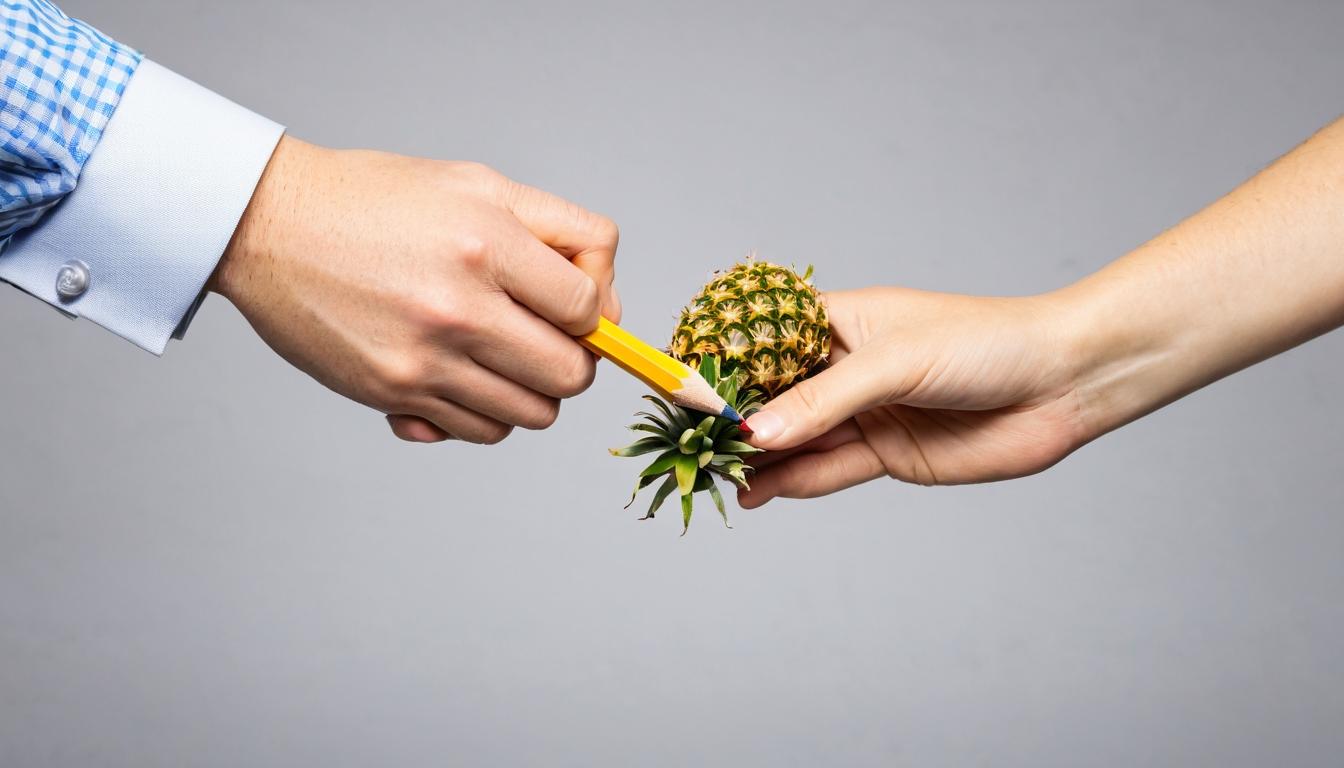
If you've ever wondered why we shake hands, you're not alone. This seemingly simple gesture has roots stretching back to ancient civilizations, where extending an empty right hand proved you weren't holding a weapon. It was a literal peace offering, a silent treaty between strangers that said, "I come in peace." The Romans refined it further, often gripping each other's forearms to check for concealed daggers up the sleeve. Today, that firm handshake in a business meeting carries the ghost of those ancient assurances, a ritual so ingrained we perform it without a second thought.
Consider the humble pencil. That yellow #2 you chewed on in grade school has a secret history tied to royalty. In the 19th century, the best graphite came from a mine in Borrowdale, England, and its discovery was so valuable that the Crown took control, treating it like a strategic resource. The iconic yellow color? It was popularized by the Koh-I-Noor pencil company in the 1890s to evoke luxury and association with Chinese yellow graphite, which was considered the highest quality. The eraser on the end was an accidental marriage by inventor Hymen Lipman, who patented attaching a rubber tip to a pencil in 1858, combining two separate inventions into the tool we know today.
Some of the world's most enduring traditions are born from pure coincidence. Take the wedding bouquet toss. This wasn't always a single woman's game of catch. In medieval England, wedding guests would tear pieces of the bride's dress for good luck, a practice that became so destructive brides began tossing their bouquets as a distraction to escape intact. The garter toss followed a similar logic, giving the eager crowd a target that wasn't the bride's attire. These rituals evolved from chaos control into symbols of passing luck to the next in line.
Our language is littered with these frozen histories. The term "deadline" has a shockingly literal and dark origin. It wasn't about newspaper copy or project management. During the American Civil War's horrific Andersonville prison camp, a line was marked about 20 feet inside the stockade wall. Any prisoner crossing this 'deadline' was shot immediately by guards. The term was later adopted by journalists in the early 1900s for the final time to submit copy, but its echo from a prison yard reminds us how language carries shadows.
Even our leisure hides curious origins. The game of chess, that battle of wits on 64 squares, evolved from the Indian game 'Chaturanga' around the 6th century. But the most powerful piece, the queen, was once the weakest. In early versions, she could only move one square diagonally. It wasn't until the 15th century in Europe, possibly inspired by powerful female rulers like Queen Isabella I of Spain, that the piece was supercharged to its current dominant status. The change revolutionized the game's speed and strategy overnight.
Sometimes, the story is in what's missing. The classic children's song "Ring Around the Rosie" is often, and incorrectly, said to be about the Black Plague. Folklorists largely debunk this as a modern myth. The more plausible origin is simpler: it was a banning game from Protestant traditions in the 19th century, where 'ring' referred to a circle dance and 'rosie' might have been a reference to a rosary, making it a secularized version of a religious ring game. The grim plague narrative, while compelling, shows how we project dark histories onto innocent things.
Then there are the silent witnesses in our homes. The pineapple, that spiky centerpiece, became a symbol of hospitality in colonial America not because of its taste, but its sheer expense and rarity. A single pineapple could cost the equivalent of thousands of today's dollars. Hosts would rent one to display as a centerpiece during dinners to show their wealth and welcome, often never even cutting it. It was the ultimate Instagram flex of the 1700s—a luxury prop for social capital.
Our daily routines are archives of human ingenuity, fear, status, and accident. From the handshake that disarmed a foe to the pineapple that bankrupted a host, every ordinary thing around us has an extraordinary past waiting to be read. These aren't just trivial facts; they're the fingerprints of history left on our present, reminding us that the world is built layer upon layer of forgotten stories. The next time you pick up a pencil or shake a hand, you're not just performing a task—you're participating in a ritual centuries in the making.
The hidden stories behind everyday objects and odd traditions