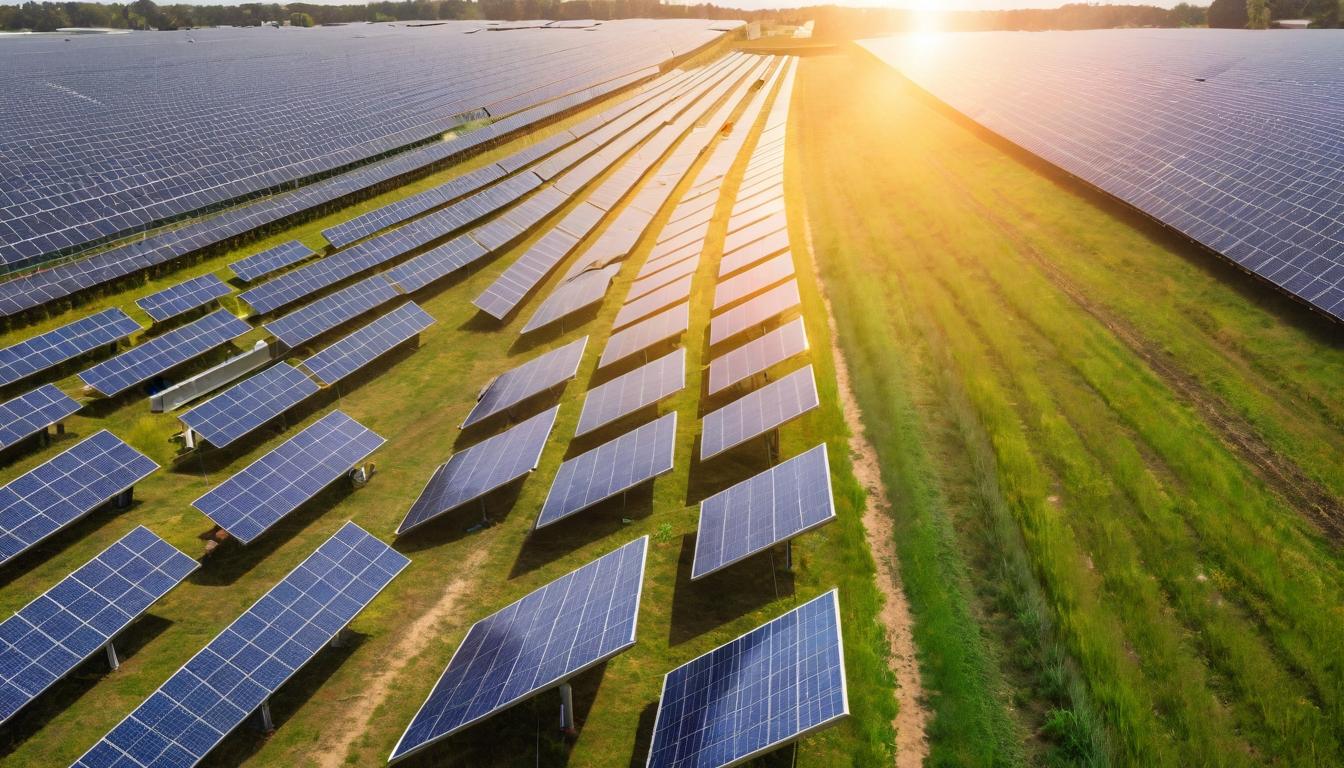
While most eyes remain fixed on flashy electric vehicles and futuristic battery announcements, a quieter revolution has been unfolding across rooftops, farm fields, and industrial parks from California to Maine. The solar industry, once dismissed as a boutique alternative for eco-conscious homeowners, has matured into a formidable force reshaping how America generates and consumes electricity. This transformation isn't happening through dramatic press conferences or celebrity endorsements, but through thousands of small decisions made by families, businesses, and communities who've discovered that going solar makes both environmental and financial sense.
What's driving this shift isn't just improved panel efficiency, though today's modules convert sunlight to electricity with remarkable precision. The real story lies in the convergence of technological advancement, manufacturing scale, and financial innovation that has brought solar within reach of middle-class households for the first time. Installers now complete residential projects in days rather than weeks, while commercial-scale arrays rise with assembly-line efficiency. Behind these visible changes lies a complex ecosystem of engineers, financiers, and policymakers who've turned solar from a niche product into a mainstream energy source.
Perhaps the most surprising development has been solar's penetration into regions once considered unsuitable for photovoltaic generation. The old assumption that solar only made sense in sun-drenched deserts has been thoroughly debunked by installations thriving in cloudy New England, rainy Pacific Northwest, and even Alaska. This geographical expansion reflects not just better panel performance in low-light conditions, but a deeper understanding of how solar integrates with existing grids and complements other renewable sources. The result is a more resilient energy system that draws power from diverse sources rather than relying on centralized generation.
Financial innovation has played an equally crucial role in solar's democratization. Power purchase agreements, solar leases, and community solar programs have eliminated the upfront cost barrier that once limited adoption to wealthy homeowners. These models allow families to lock in electricity rates for decades while businesses transform energy expenses from unpredictable costs into predictable investments. The economic case has become so compelling that even traditionally conservative institutions like school districts, municipal governments, and agricultural operations are embracing solar not as environmental statements, but as sound financial decisions.
Yet this progress faces challenges that receive little attention outside industry circles. Supply chain vulnerabilities, interconnection queue delays, and regulatory inconsistencies create friction in what should be a smooth transition. The industry's rapid growth has exposed weaknesses in grid infrastructure never designed for bidirectional power flow, while trade disputes threaten to disrupt the delicate balance of global manufacturing. These obstacles don't diminish solar's potential, but they reveal how deeply our energy systems must evolve to accommodate distributed generation.
Looking forward, the most exciting developments may come from integration rather than innovation. Solar paired with storage creates self-sufficient microgrids that can power communities through outages. Solar integrated into building materials turns structures into power generators without aesthetic compromise. Solar combined with electric vehicle charging creates transportation systems fueled by sunlight. These synergies suggest we're just beginning to explore solar's full potential as more than just an alternative energy source, but as a foundational component of smarter, more resilient communities.
The true measure of solar's success won't be found in annual installation statistics or efficiency records, but in its growing invisibility. As solar becomes ordinary rather than exceptional, as panels blend into rooftops and landscapes, as sunlight becomes just another fuel in our energy mix, we'll know the revolution has truly taken hold. This normalization represents the ultimate victory for an industry that has spent decades proving its worth, not through rhetoric, but through relentless improvement and undeniable results.
The hidden revolution: how solar innovation is quietly transforming America's energy landscape