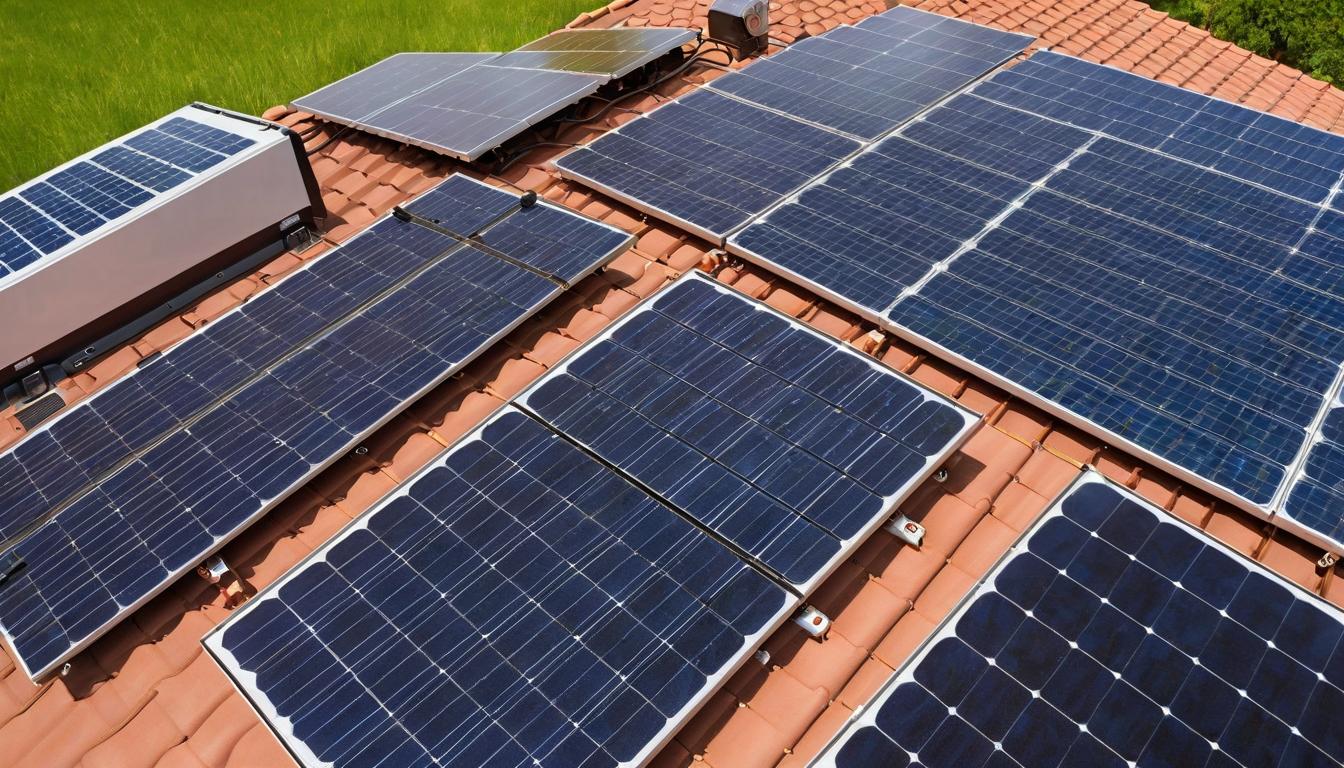
Walk through any neighborhood with solar panels, and you'll see the same blue-black rectangles glinting in the sun. But the real story of solar's transformation isn't on rooftops—it's in the unsexy boxes humming in garages, the silent trackers following the sun's arc, and the chemistry happening inside batteries that most homeowners never see. While panels get the spotlight, these supporting technologies are quietly rewriting the rules of energy independence.
Inverters have evolved from simple converters to sophisticated energy managers. Modern systems don't just turn DC to AC—they optimize each panel's output, communicate with the grid, and even predict weather patterns to maximize production. Companies are now embedding artificial intelligence that learns your household's energy patterns, adjusting output before you even realize you need more power. This intelligence layer represents solar's second act: moving from simple generation to smart energy ecosystems.
Single-axis trackers, once reserved for utility-scale projects, are finding their way to commercial rooftops and even residential installations. These sun-following systems can boost energy production by 25-35% compared to fixed-tilt systems. The economics have shifted dramatically—what was once a premium option for solar farms now makes financial sense for warehouses, schools, and larger homes. The technology has become so reliable that some systems come with 25-year warranties, matching the panels they support.
Battery storage is undergoing its own quiet revolution. Lithium-ion gets the headlines, but flow batteries, saltwater batteries, and even revived lead-acid technologies are creating options for different needs and budgets. The breakthrough isn't just in chemistry—it's in integration. Modern systems seamlessly switch between grid power, solar production, and battery reserves without homeowners noticing the transition. This creates what energy experts call 'the invisible backup'—protection against outages that doesn't require lifestyle changes.
The interconnection process remains solar's most frustrating bottleneck. While hardware advances rapidly, paperwork and utility approvals move at glacial speeds. Some installers report waiting six months for permission to operate new systems—even when the hardware was installed in days. This regulatory lag creates what one industry veteran calls 'solar purgatory': systems sitting idle while homeowners pay mortgages on equipment they can't use. States like California and Massachusetts are experimenting with automated approval systems, but most of the country still operates on fax-era processes.
Community solar represents democracy in action for those who can't install rooftop systems. These shared arrays allow apartment dwellers, renters, and homeowners with shaded roofs to buy into solar projects elsewhere. The model has expanded beyond its environmental roots to become an economic development tool—low-income communities can access savings without upfront costs, while local governments gain tax revenue from underutilized land. The most innovative programs combine solar with job training, creating pathways into the green economy.
Financing innovation has done more to expand solar access than any technology breakthrough. Power purchase agreements (PPAs), once the domain of commercial projects, now help homeowners go solar with zero down payment. The twist? Third-party ownership models are evolving into hybrid approaches where homeowners can purchase their systems after 5-7 years at predetermined prices. This 'try before you buy' approach has removed the single biggest barrier to adoption: upfront cost.
The recycling challenge looms as early solar installations reach end-of-life. While panels are designed to last 25-30 years, the industry faces a wave of decommissioning in the coming decade. Current recycling methods recover about 80% of materials by weight, but the valuable silicon and silver often get lost in the process. Startups are developing chemical processes to recover high-purity materials, potentially creating a circular economy where old panels feed production of new ones. This isn't just environmental responsibility—it's becoming a competitive advantage as material costs rise.
Microinverters versus string inverters represents solar's great debate. Microinverters, attached to each panel, optimize individual performance but cost more upfront. String inverters, handling multiple panels together, offer lower initial costs but can suffer from the 'weakest link' effect. The decision isn't technical—it's psychological. Homeowners who monitor every kilowatt-hour tend toward microinverters, while those who just want lower bills often choose strings. Installers report the choice increasingly comes down to how homeowners relate to their energy data.
Solar's next frontier isn't technological—it's social. The most successful installations consider how people actually live with energy. Systems that automatically adjust to houseguests, predict holiday baking marathons, or learn when teenagers charge electric vehicles represent solar's maturation from gadget to household partner. This human-centered design thinking may determine whether solar remains a niche product or becomes as ubiquitous as the refrigerator.
The industry's dirty secret? Installation quality varies wildly. While manufacturers warranty equipment for decades, workmanship warranties often cover just 2-10 years. A poorly installed system can lose 20% of its production potential through tiny gaps in panel alignment, suboptimal wiring, or incorrect mounting. The industry is responding with certification programs and digital tools that guide installers through optimal placement, but the variation between crews remains solar's quality wild card.
Looking forward, building-integrated photovoltaics (BIPV) promise to make solar invisible. Solar shingles, window coatings, and facade materials that generate power while serving structural functions could transform buildings from energy consumers to producers. The technology exists—the challenge is bringing costs down to compete with 'bolt-on' solar. When solar becomes part of construction rather than an addition, we'll know the revolution is complete.
The solar revolution's hidden players: How inverters, trackers and batteries are reshaping energy